


Hey friends,
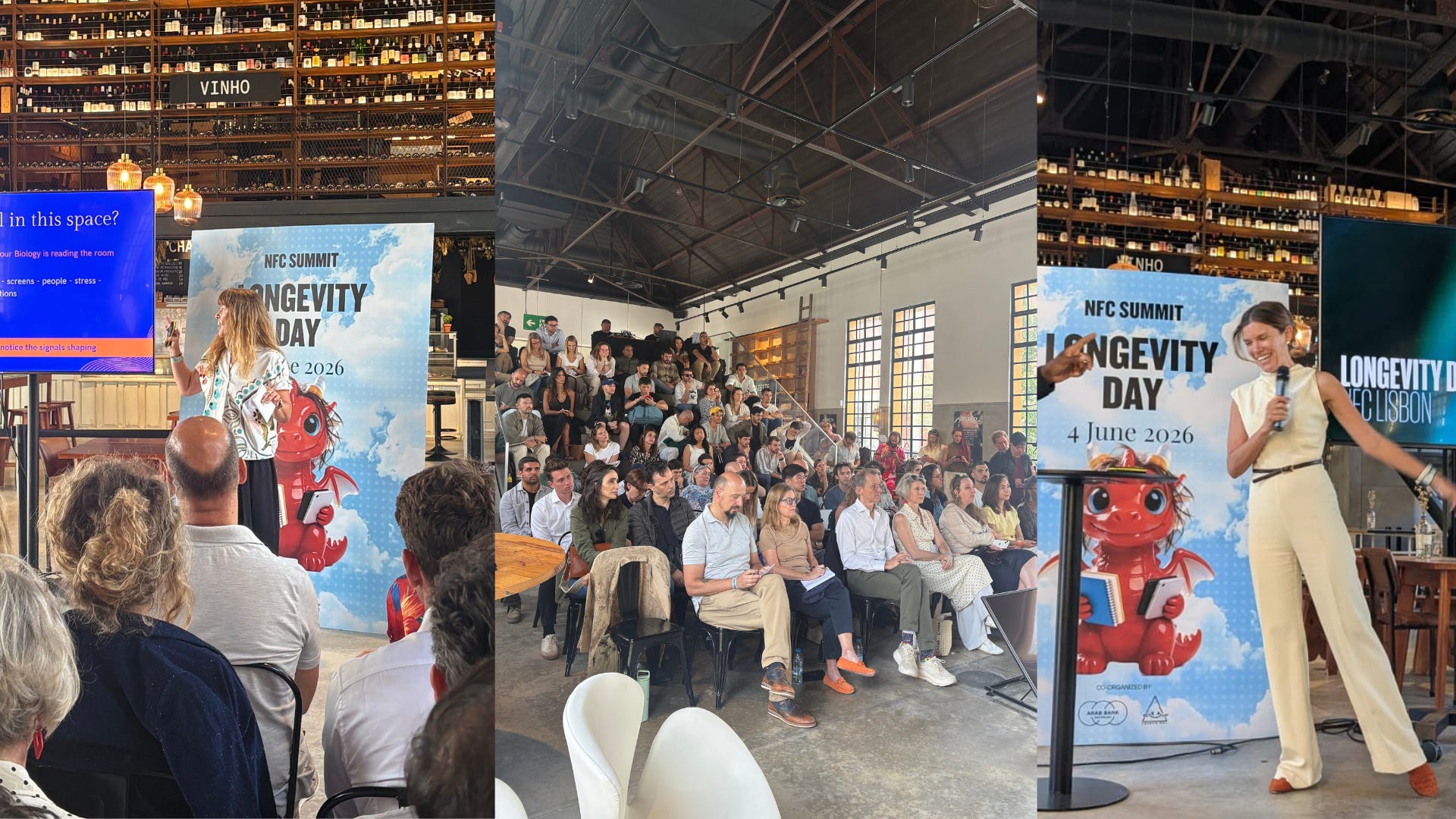
Last week I curated a stage of 30 speakers covering longevity topics ranging from sleep, breathwork, and women’s health to consciousness and cryopreservation.
It was my first full day event that I’ve curated and it was a huge success, overcapacity with standing room only. Barely anyone left because they didn’t want to give up their seats. Highly engaged audience!
Some feedback that just melted my heart:
“Really brilliant day Nina! You put together such a great event and I loved alllll the talks.”
“Incredible event. I wish I could have stayed the whole day. All of the speakers were so good.”
“Longevity day was the place to be in Lisbon last week.”
“Part of me wishes we could turn back time and do it all over again today, tomorrow, and the day after. Thank you once again for creating such a special experience.”
Cheers,
Nina
💬 In this note:
The Exhaustion No One Is Diagnosing Correctly
📚 Yellowface
⚡️ Fart Sensor
#185: The Root Cause of Exhaustion No One is Diagnosing Correctly

I have one colleague that I meet with multiple times a week and every time we open the video chat, the conversation starts with a “this week is AHHHHH” followed by the breakdown of why the days have been insane, the meetings back-to-back, and the impossible volume of work.
This isn’t one bad week or a deadline that got away from him.
This is every week.
This is normal.
Another friend of mine only had time to have a catch-up call with me on her way to the airport because she is flying from Boston to SF multiple times a month now for work.
Another texted me at 9pm telling me she is wrecked.
Meanwhile, my calendar is also full. Podcast interviews, events, writing, ceramics, padel, dance, calls I said yes to. I worry about fitting things in. But I’m not exhausted the way they are.
My calendar has the same density, but something is different.
A packed calendar can lead to exhaustion or it can be fulfilling.
Something is wrong with how we are talking about what occupies our time, and how we feel after that time is spent.
When we look at the calendar, we think we have too many meetings, too much screen time, too much stimulation.
The story we tell ourselves is we’re doing too much. So the answer is subtractive.
The advice is cancel the meetings that don’t need to exist. Do a digital detox. Try a dopamine fast. Block your calendar. Say no more often. Take the vacation you’ve been putting off.
Some of this is good advice. Some of it works for a week.
But none of it solves the thing.
Most of us experience the Sunday Scaries.
The day you’re supposed to be recovering. You rest, you do the slow morning, you take the walk, you don’t check your email. And by Sunday night the dread is there anyway. Monday looms ahead of you. You’re so anxious about the week ahead that you start making the to-do list on Sunday night, just to “get ahead.”
You trade your last hours of the weekend for the illusion of control over the next day coming.
Or you try having an early night mid-week.
You finally have an evening with nothing on it, no work dinner, no call, nothing you said yes to three weeks ago and now regret. You think okay, this is it.
I’ll go to bed at ten. I’ll get the full eight hours. I’ll wake up actually rested for once. The alarm goes off and you’re just as wrecked as every other morning. Because one good night doesn’t undo the twenty before it. You’re exhausted from the last six months, and a single early bedtime can’t pay down that kind of debt.
And vacation doesn’t even seem to fix it. My colleague went to Morocco for his birthday and he didn’t bring the laptop.
He did it right, the actual disconnection. But then the first call we had after he got back, the conversation opened the same way it always does. “This week is AHHHH.”
A week back at his desk and the vacation was already gone. Whatever it refilled, it wasn’t what was actually empty.
So if it’s not too many meetings, and it’s not too little sleep, and it’s not the missing vacation, what is it?
Self-Determination Theory
When I really started to dive into it, I realized that the reason for the exhaustion is not from doing too much. It’s from doing too little of your own choosing.
There’s a framework from psychology called self-determination theory (SDT). It says humans have three basic psychological needs we have to meet to function, and autonomy is one of them. Not autonomy in the grand sense of running your own life. Autonomy in the granular sense: being the one who decided what you’re doing right now.
Chronic low-autonomy environments produce a specific kind of depletion that looks like tiredness but does not respond to rest. You can’t nap your way out of it.
This is also why I’d be just as exhausted as my colleagues if I spent a week doing things I didn’t pick.
The shape of the week matters less than the ownership of what fills your time.
There is an obvious objection here…”But I chose my job. I chose to have kids. I chose this life. So why am I exhausted?”
All true, but choosing the container isn’t the same as choosing what fills it day to day.
You picked the job, but you didn’t pick the 6am meeting.
You picked parenthood, but you didn’t pick that you need to bring homemade muffins to school tomorrow morning.
Macro-autonomy doesn’t substitute for micro-autonomy.
The depletion happens in the small moments. The meeting you didn’t schedule, the muffins you didn’t volunteer for, the Slack message that pulls you off the thing you were actually choosing to do.
Each one is too small to protest but the accumulation is the whole game.
If you’ve been wondering why you can’t seem to rest your way out of this, it’s because the problem was never how much you were doing. It was how little of it was yours.
So, What Actually Refills The Tank?
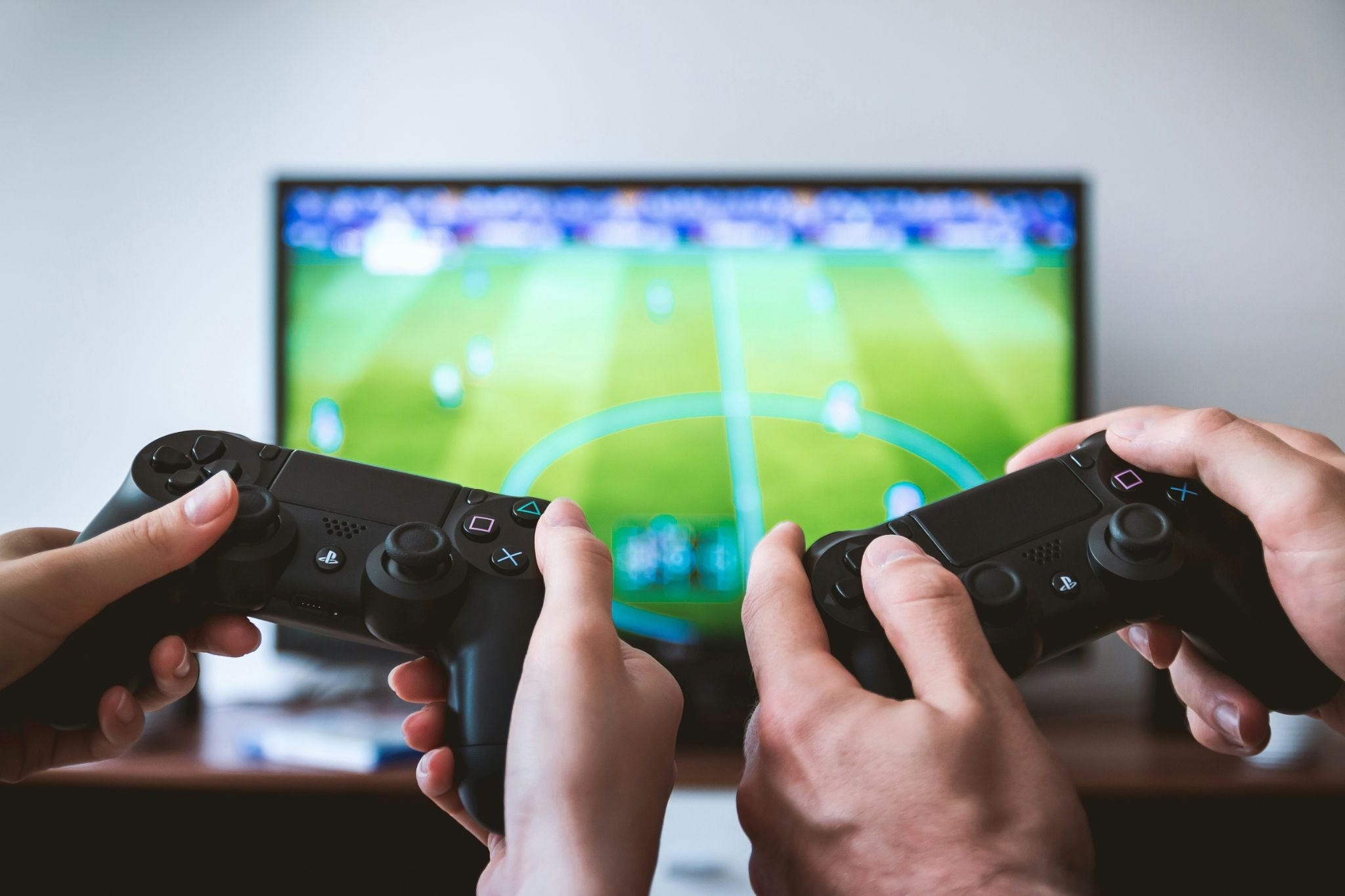
Side quests, hobbies, and weird small projects that nobody asked you to do. The thing you are doing because you want to, not because it’s on your to do list.
These replenish, because they are self-directed.
This is why the couch fails at being rest. Sitting there scrolling isn’t lazy, your body genuinely needs something, and something with a low cognitive load. The couch/scrolling is a reasonable guess at that.
But the deficit was never inactivity, it’s again the ownership of the tasks.
And unfortunately, scrolling doesn’t supply that ownership. It just supplies cheap dopamine.
Wellness coaches often frame this as a novelty problem. It makes hobbies sound like a brain hack, pull the lever and get the reward.
Essentially saying, “do new things because dopamine.”
But it actually is “do chosen things because your nervous system is starving for evidence that your life is yours.”
Doing side quests is a way to reclaim your autonomy.
Therefore, your hobby, your padel game, the side project you’ve been pushing away for months, they all have a deeper purpose. These aren’t novelty-seeking or dopamine-chasing or productivity-coded self-improvement. They are evidence-gathering for your nervous system.
Your nervous system needs proof that your life belongs to you.
And the only thing that supplies proof is actions that you chose to do actively.
The chosen action is the only thing that shows your nervous system that you are in charge.
That’s why a nap you chose to take can refill the tank, but a vacation your boss prescribed to you doesn’t.
The Biggest Villain is both Work Culture and Wellness Culture
Work culture is the obvious villain in this story and wellness culture is its sidekick.
Both are about optimization, and both promise that if you tune your schedule correctly, you’ll feel better.
Some of this has real science behind it. Meeting timing, morning routines, sleep windows, these things do affect how you feel. The wellness industry didn’t invent the underlying research.
But it took the research and wrapped it in a prescription, and the prescription asks you to perform optimization inside a structure you didn’t design.
Sleep needs are individually determined. Some people are wired to wake at 5am and some at 9am, but the underlying biology is well-established and it’s called your chronotype.
Nonetheless, wellness culture has decided that 4:30am is virtuous and 9:00am is lazy, causing some people to spend years trying to force themselves into a schedule their biology was never going to accept.
But you didn’t choose any of it. You inherited that structure from a wellness influencer, whose body, schedule and life happen to work that way, and now you’re trying to fit yourself into their container.
The core of this problem is actually due to a demanding work culture. Most people don’t have enough autonomy in their schedules to discover what their body actually needs in the first place.
So they fail, and they’ll conclude they lack discipline. Discipline was never the problem. The prescription was wrong for them, and the prescription was never theirs to begin with.
Even worse, many people now again have to force themselves into a schedule that doesn’t fit their biology with the return to office mandates.
After years of working from home, and being more productive by nearly every available metric, millions of people are now back at desks, commuting, sitting through meetings that could have been emails, available in a way that’s mostly about being seen as available.
With the return to office, what changed is the granularity of choice.
When working from home, you decided when to make coffee. When to take a walk. When to step away to think. When to answer Slack and when to leave it.
In the office, those micro-decisions get absorbed by the environment. You don’t choose when you’re interrupted. You don’t choose when to be reachable. You can’t even choose to be in a quiet place in some offices.
Each loss is too small to protest. But each loss of choice wears you down, and the accumulation leads to exhaustion.
Performative availability is more important to companies now than ever. However no one is realizing that this is what causes exhaustion.
The expectation that you’re reachable at all times means your attention is never fully yours, even when no one’s contacting you. You’re holding a slot open. The waiting leads to the feeling of depletion.
Both cultures use the same trick. They give you the appearance of choice inside a structure you didn’t choose. The morning routine looks like authorship. So does the open-plan office with the unlimited PTO. The wrapping is autonomy. The contents are someone else’s blueprint.
The next time you feel the exhaustion that rest doesn’t touch, the question to ask yourself is how much of this week did you actually choose.
Not the job, not the city, not the life, the container is already chosen. Reflect on the hours. The meetings. The morning. Tuesday afternoon between 2 and 4. The thing you’re doing right now.
If the honest answer is “I did not choose much of this,” you don’t need a vacation. You need a side quest. Something small, chosen, slightly pointless and entirely yours.
Your nervous system needs proof that your life still belongs to you.
That’s the antidote to exhaustion. Not less of your time, but more of it spent the way you decided it should be.
📘 Thinking of Diving Deeper? Check Out My Guidebooks.
You can download all 9 and more at ninapatrick.xyz/guidebooks. Or if you want everything in one place, the guidebooks, the full deep dives, and early access to events, just upgrade to a paid subscription. Paid subscribers get the complete guidebook library included.
📚 Book of the Week
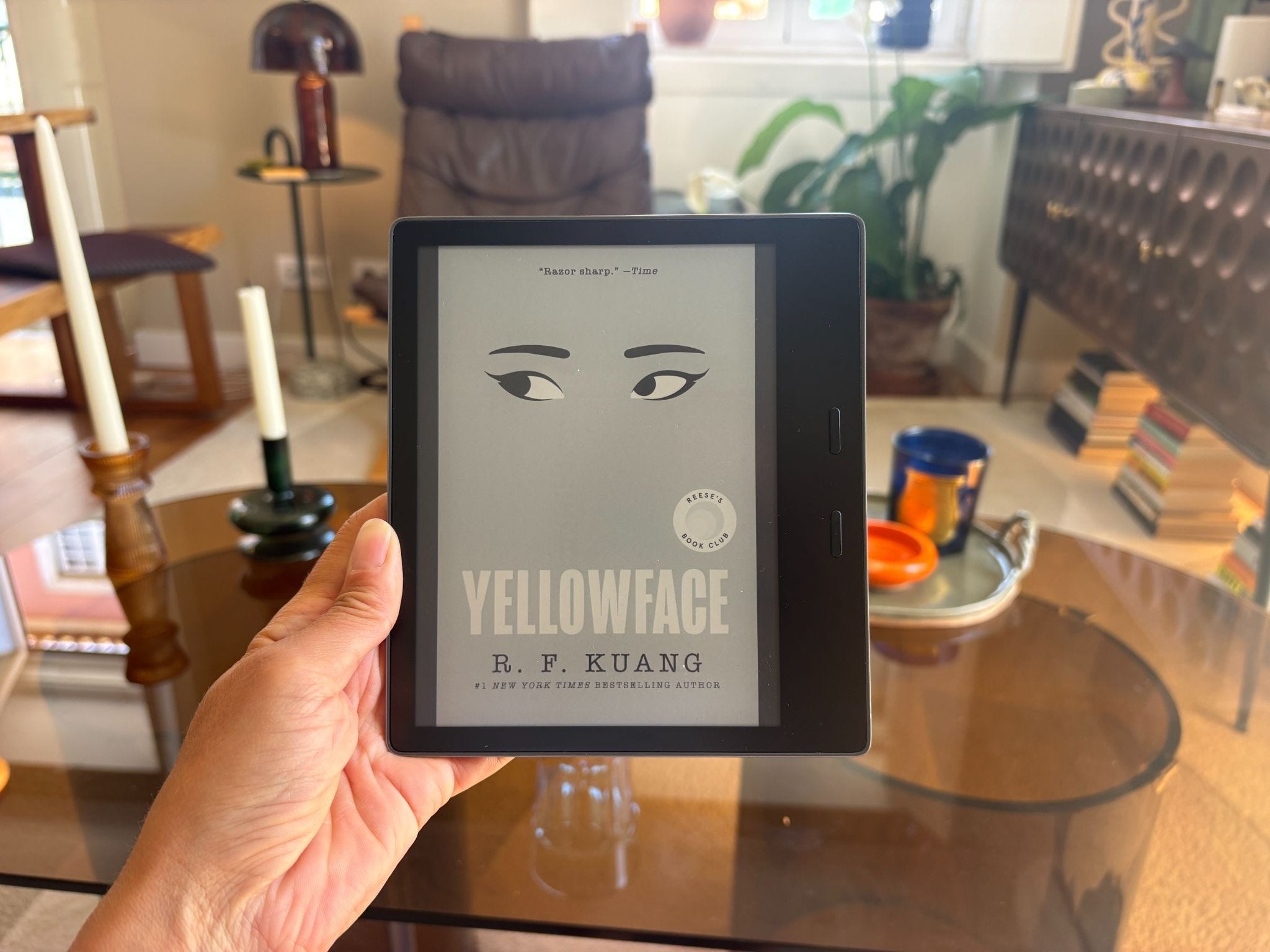
Yellowface by R. F. Kuang
Rating: ★★★★★
I’ve seen this book over and over as a bestseller and definitely waited too long to pick it up.
I didn’t know what to expect, from the title I assumed a white woman impersonating an Asian woman...and while there is some of this going on, it’s more subtle than I originally thought.
The story is about a famous Asian writer Athena, and her supposed best friend and struggling writer June Hayward, the cutthroat publishing industry, cancel culture, and how far a woman will go to obtain the fame and fortune she thought she wanted.
What surprised me most about this book is that I hated all of the main characters. It’s rare to read a book and not relate to a character in some way, empathize with them, or at least find them somewhat endearing.
But this batch of characters, they are all terrible people! June is the worst of them all, but Athena is not innocent either. At moments you really want to jump into the book, grab June and tell her to do the right thing, which does make for an entertaining read.
The novel is fast paced, exhilarating, and I found many evenings when I couldn’t put it down because I really needed to read my characters out of bad situations, only to be surprised when the next situation was worse than the one before.
Great beach read or one for a long plane ride.
⚡️ Check This Out

Scientists have invented underwear that measures your farts.
Researchers at the University of Maryland built a tiny wearable sensor that attaches to underwear and tracks gas production around the clock, measuring hydrogen, methane, and hydrogen sulphide released by gut microbes as they break down your food.
As lead researcher Professor Brantley Hall put it, we don’t actually know what normal fart production looks like, and without that baseline it’s hard to know when someone’s gas output is truly excessive.
Apparently, the team has found that healthy adults fart an average of 32 times per day - around double the previous estimate.
However their findings also show that daily farts can range from as few as 4 to as many as 59.
This data could help unlock new insights into food intolerances, IBS, and other digestive conditions.
🗣️ Looking for the Nina’s Notes Podcast?
You can also find the Nina’s Notes podcast on YouTube, Spotify, Apple Podcasts, and Substack Podcasts where I interview entrepreneurs and have an archive of 100+ voiceovers of previous Nina’s Notes.
I also co-host Longevity.Technology UNLOCKED!
🎙️ Mondays: LT UNLOCKED interviews with leading longevity innovators, clinicians, and scientists
📰 Wednesdays: Nina’s Notes in your inbox with interviews, deep dives on longevity & neuroscience
🎙️ Fridays: LT UNLOCKED News, a weekly news roundup of the latest in longevity
Find Longevity Technology UNLOCKED on Spotify, Apple Podcasts, and YouTube.
Edited by Wright Time Publishing
Really enjoyed reading this! That was a new point of view on a problem most people face at some point in their life!