


Hey Friends,
Two weeks ago, I got my weekly screentime report from my iPhone and I saw that I spent 10 hours that week on Instagram.
I was embarrassed, and a bit appalled. I thought - I could be doing so much more with those 10 hours a week, I could start another company with that time.
As I thought about what I wanted to replace Instagram with, immediately my brain went to replacing that time with other highly productive, high-cognitive engaging tasks - like language learning, or more of my day to day work.
But that’s not what my brain wants.
One (of the many) reasons my brain goes to Instagram, is because it’s a low cognitive load task.
My brain wants to relax.
In those 10 hours a week, it craves something easy to do.
Instagram does more to our brain than just letting it relax, it also keeps us hooked by spiking our dopamine. And giving us “cheap dopamine” at that (more on cheap dopamine in Nina’s Notes #153).
So then I thought, what if I replaced those 10 hours, with just…being bored.
And that led me to this week’s note…The Power of Boredom.
P.S. I recorded this episode and it’s on my YouTube Channel. Watch it here:
💬 In this note:
💊 The Power of Boredom
📚 Unreasonable Hospitality
⚡️ New Endometriosis At-Home 10-min Diagnostic Test
🔮 Cool Job Opportunities
#161: The Power of Boredom
In the modern world, we are hyperconnected.
We can talk to our friends in an instant.
Watch videos from friends and strangers on TikTok, Instagram and YouTube.
We constantly stay engaged.
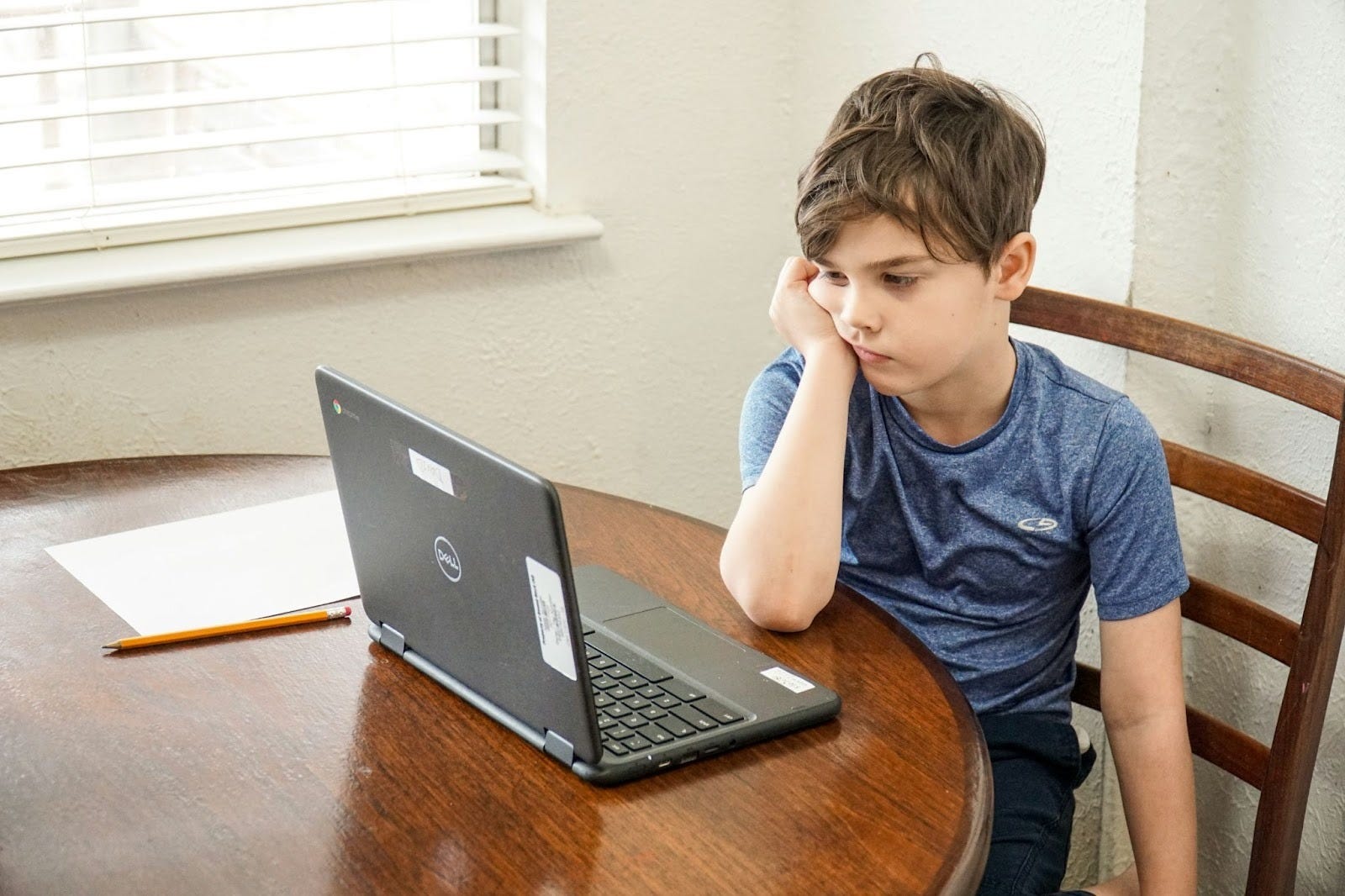
But something crucial is missing from our lives now: boredom.
That uncomfortable, restless feeling of having nothing to do.
The lethargy of simply wasting time with friends.
The quiet moments where your brain has nothing to occupy it.
We need to get bored.
Arthur Brooks, the author of The Happiness Files: Insights on Work and Life says “you will have less meaning and you will be more depressed if you are never bored.”
That statement struck me deeply.
I remember when I was a kid, an only child who spent a lot of time alone, I would run down the stairs to my parents and announce dramatically, “I’m BORED!” They’d offer suggestions: read a book, play a game together, go outside.
But often I would still be bored.
Sometimes I needed help fighting the boredom. Other times I’d create things myself. I’d turn to crafting or invent a game to play on my own.
Fortunately, depression isn’t a feeling that stands out from my childhood memories. As adults, we know the weight of depression and can feel it more deeply.
Brooks’ statement resonates because we’re not bored enough as a society, and therefore we’re chronically depressed instead.
What Happens When We’re Bored
Boredom is the tendency for us not to be cognitively occupied.
(As I write this sentence, I feel an urge in my brain to just...relax. It craves this lack of cognitive occupation and stimulation.)
When our brains aren’t cognitively occupied, our brain switches over to the default mode network (DMN).
And we really don’t like it.
Humans dislike boredom so much that we’d rather endure pain.
Dan Gilbert, Edgar Pierce Professor of Psychology at Harvard even put this to the test.
He asked people to sit in a room for 15 minutes with instructions to do absolutely nothing.
There was nothing in the room to do, except there was a button in front of them that they could push. If they pushed the button, they gave themselves a painful electric shock.
You had a choice: sit there bored, or get a shock?
A large majority of the participants chose to give themselves shocks instead of doing and thinking about nothing.
This experiment went viral in 2014, with the Boston Globe publishing the epic clickbait title “People prefer electric shocks to time alone with their thoughts.”
Why We Avoid Boredom
We hate boredom because when our default mode network switches on, it leads to us thinking about uncomfortable things.
The brain starts to wander and ask big questions like, “What am I doing with my life?” and “What does my life mean?”
While those questions are uncomfortable because we may not have the answers, they’re incredibly important questions to sit with.
One of the reasons we have had such an explosion of depression and anxiety today is because people don’t know the meaning of their lives.
Most of the population isn’t even looking for meaning. That’s because we’ve accidentally engineered boredom out of our lives.
And that’s a massive problem.
The modern-day version of the electric shock is picking up our phones at the first sign of boredom.
That 15-second wait at a traffic light? Scroll.
A quiet moment in line? Check notifications.
We’ve become so efficient at eliminating these micro-moments of boredom that we’ve shut off our default mode network almost entirely.
Those uncomfortable mental wanderings aren’t bugs, they’re features.
They’re how we process life, find patterns, and discover meaning. When we constantly interrupt this process, we’re essentially running a “doom loop of meaning.”
Each time we choose distraction over reflection, it becomes harder to access that deeper sense of purpose.
The Boredom Challenge
Tomorrow morning when you go to the gym, don’t take your phone.
Can you handle it? (I wrote about a 48-hour phone detox in Nina’s Notes #128.)
Don’t listen to a podcast while you’re working out. Just be in your head. You could have your most interesting ideas while you’re exercising without devices.
Here’s an experiment to try this week: commute with nothing. No podcast, no headphones, no radio. Start getting better at being bored for periods of 15 minutes or longer.
What Changes When You Embrace Boredom
You’ll be less bored with ordinary things. You’ll be less bored at your job, with your relationships, with the things going on around you. You’ll start digging into the biggest questions about life, purpose, meaning, significance.
You’ll feel happier.
How to Get Bored More Often
Set time away from the phone. For me, I put my phone away at 9pm every night. I try not to pick it back up until 8am the next day. I don’t even sleep with my phone in the bedroom.
Schedule regular screen cleanses. Spend longer periods away from your phone. This is the best way to remind yourself that your life doesn’t revolve around these devices.
Schedule “do nothing” time. Resist the urge to distract yourself. Embrace the moment and see what thoughts or ideas arise. Use the time for reflection, to think about feelings and life, rather than filling the void with external entertainment.
Be bored with friends. Have you ever invited someone over just to sit on your couch and “do nothing” together? Try it. It’s nice to have a “do nothing” companion.
You may worry that you’re going to miss something.
The truth is, you’re killing yourself with hyperconnectivity.
The news can wait. Your family and friends will understand if you don’t get back to them immediately. Our grandparents didn’t know what was happening constantly in the government and world news.
According to a recent survey, 74 percent of Americans feel uneasy leaving their phones at home. 71% check their phones within the first 10 minutes of waking up. 47% consider themselves “addicted” to their phones.
Boredom Fuels Creative Potential
Boredom boosts creativity. By allowing your mind to wander, boredom can lead to innovative solutions and new ideas.
Speaking recently about her time in lockdown, the Booker Prize-winning novelist, Anne Enright told of her delight at “tooling around all day” and suggested that having little to do can be a very good thing. “Boredom is a productive state so long as you don’t let it go sour on you,” she said in The Guardian, adding: “I wait for boredom to kick in because boredom, for me, is a very good sign.”
According to Agatha Christie in her 1955 interview with the BBC, “there’s nothing like boredom to make you write.”
With no formal education until she was 16. Christie said that “By the time I was 16 or 17, I’d written quite a number of short stories and one long dreary novel.”
Neil Gaiman’s advice “You have to let yourself get so bored that your mind has nothing better to do than tell itself a story.”
The late David Foster Wallace was so fascinated by boredom he based a novel on it. He set the posthumously published The Pale King in a tax office and, in a note found with his unfinished manuscript, explained his reasoning. “It turns out that bliss – a second-by-second joy and gratitude at the gift of being alive, conscious – lies on the other side of crushing, crushing boredom.”
Kate Nash credits boredom to her success as a musician. She explained in a Rolling Stone feature that the boredom she experienced as a teenager led her to start writing her music. “I wrote a lot because there wasn’t much else going on in my life.” Later, when her friends were off at university and she was stuck at home working in a clothes shop, a lack of things to do spurred her on again. “There was a lot of sighing and staring out of the windows. Again boredom became a great motivator. I started writing songs again; I posted them on MySpace, and very quickly and unexpectedly became a pop star with a Number One record.”
While boredom itself is not creative, what it leads to can be remarkable.
We often think that “doing nothing” means we literally have to do nothing and sit and stare at the wall. But as Rebecca Solnit writes in her book Wanderlust: A History of Walking, “Thinking is generally thought of as doing nothing in a production-oriented culture, and doing nothing is hard to do. It’s best done by disguising it as doing something, and the something closest to doing nothing is walking.”
I dare you to try to get out of your head, put the phone down, and get bored this week.
Tell me about your experience. I can’t wait to hear what thoughts and ideas you had.
Want To Go Beyond the Newsletter?
I mentor founders and ambitious professionals who want to build resilient minds and companies using evidence-based tools from neuroscience and longevity science.
Click here to learn more about private mentorship and upcoming group sessions here.
📚 Book of the Week
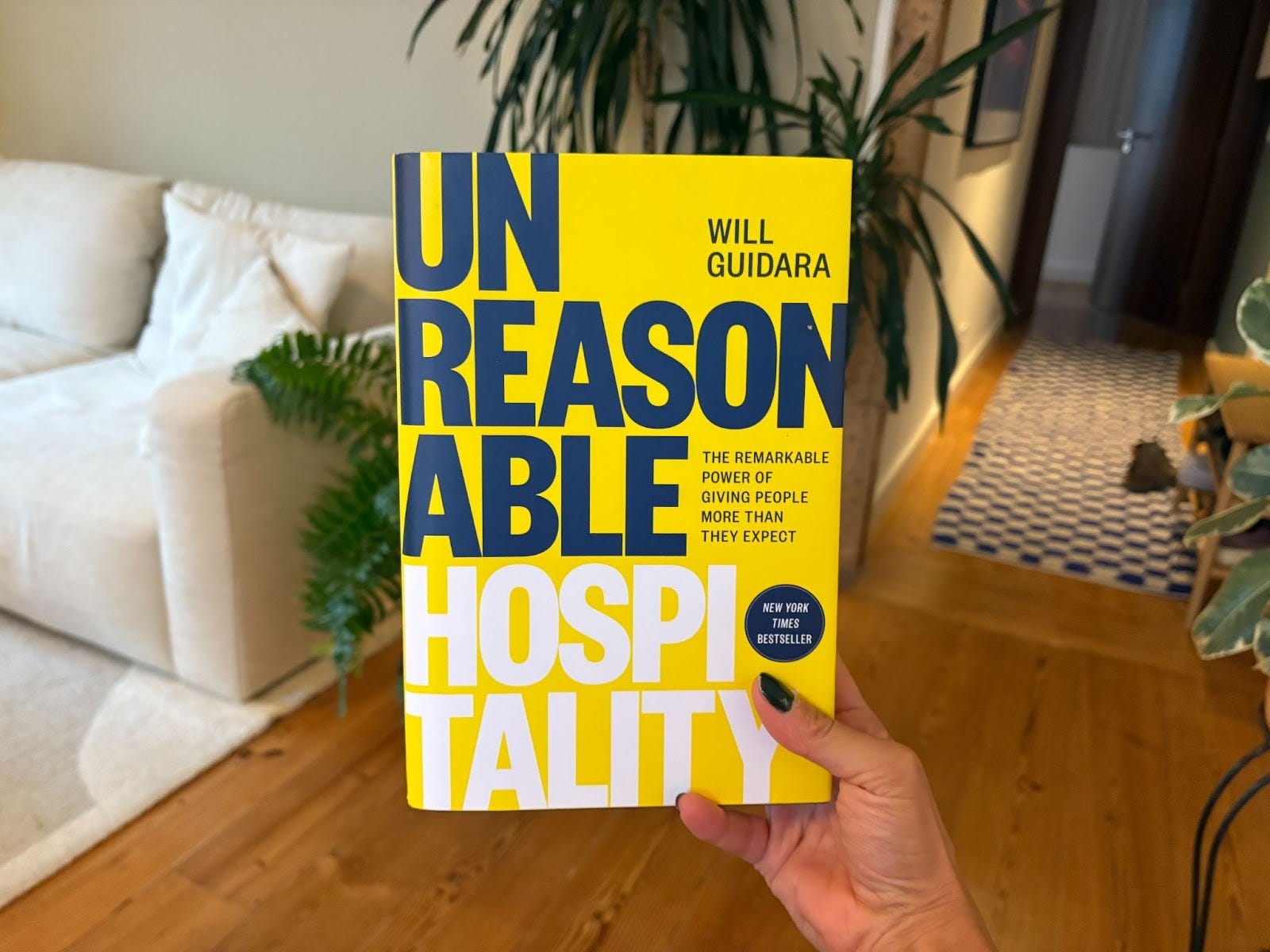
Unreasonable Hospitality by Will Guidara
Rating: ★★★★★
This book was such a pleasure and surprise to read.
Will Guidara tells the story of his time as the general manager of Eleven Madison Park between 2006 and 2012. During that time, he and his kitchen and floor team transformed EMP into a 3 Michelin star restaurant.
His passion is on hospitality and how to have people not only enjoy a fantastic meal, but remember the feelings and comfort they had from the moment they walked in, to when they made it home.
Will found ways to go above and beyond at EMP and really wow his customers.
An example of unreasonable hospitality that stood out to me was, Will noticed that sometimes during dinner, a guest would go out to add quarters to their parking meter, and interrupt their meal, so when guests arrived at EMP, the maitre’d would ask if they came by car or taxi. If they came by car, the staff would ask where they parked and would tell guests that they would keep an eye on their parking meter so guests could relax and enjoy their meal.
For the cost of just a few quarters, guests would be wow’d, amazed and they would come back again.
These small acts of going above and beyond leave a lasting impression.
Another example I loved is that instead of giving guests a coat check ticket, they would organize the coats by table and remember themselves, then when the guests were ready to leave, staff would have their coats waiting for them at the door. No more shuffling into your pockets and worrying about holding on to a small paper or token.
They googled guests’ names when they made a reservation so they knew what they looked like and when they arrived for their reservation, they could be greeted by name.
Guidara even created a team of what they called “Dreamweavers” that would listen to guests’ conversations, and then create an experience for the guests that they wouldn’t have anywhere else.
One floor captain overheard an out-of-town regular regretting that he hadn’t gotten his daughter a stuffed animal as he’d promised, so their Dreamweaver fashioned a perfect teddy bear for him out of kitchen towels.
One night, a banker was lamenting about a fundraise for a company and told his waiter that “an after-dinner drink would be great, but what he really needed was a million dollars to finish the raise. Since the EMP team didn’t have that budget, he filled a bag with ten 100 Grand chocolate bars and tucked it under his chair.
Guidara showed his team how to be careful listeners and then let them run wild with their personal creative execution to create an impressive show of unreasonable hospitality.
This was a really fun book to read and very inspiring about how anyone, in any industry can bring unreasonable hospitality into their office, company, or event.
This was a reader recommendation by Edouard. Thanks Edouard!!
⚡️ Check This Out
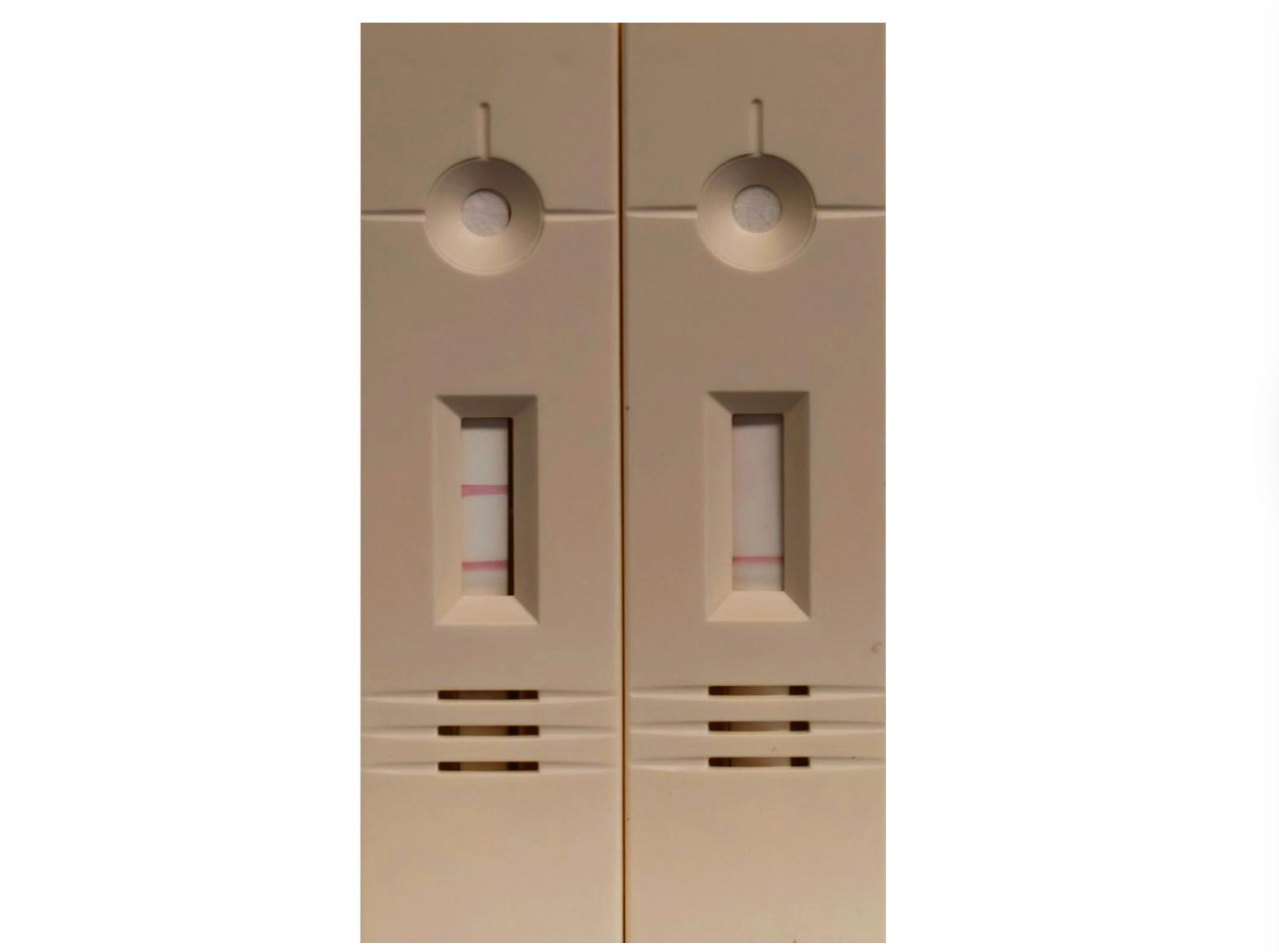
Researchers from Penn State have developed a proof-of-concept at-home test to detect endometriosis in 10 minutes using period blood.
The device is similar to a pregnancy test, showing two lines if the biomarker is detected in the sample.
Penn State Professor Dipanjan Pan said that the blood and tissue shed from the uterus each month is often overlooked as medical waste, and even stigmatized by some.
When in fact, menstrual blood is filled with biomarkers which could be used to enable earlier, more accessible detection of endometriosis and other diseases, like HPV (See Nina’s Notes #143 where I featured WomenX Biotech who has developed PadX, a HPV test from a regular sanitary pad with a built-in testing strip that collects cervical cells from menstrual blood).
The researchers developed a new technology to enable the detection of the HMGB1 protein, a protein implicated in endometriosis development and progression, in menstrual blood with 500% more sensitivity than existing laboratory approaches.
They were able to create a test with such significant improvements in sensitivity due to a novel technique to synthesize nanosheets made of the atomically thin 2D material borophene, which they published on July 17, 2025 in ACS Central Science. The discovery of the nanosheet material was featured on the cover of the journal.
Existing diagnostics for endometriosis involve extensive intravenous blood tests and imaging studied over several years.
One study of 218 women revealed diagnosis of endometriosis could take up to 12 years in the United States.
The team plans to scale up their approach for clinical studies, and expand the technology to test for other biomarkers such as HPV and cervical cancer.
This new test is a huge advancement for women’s health, allowing for early detection and intervention of endometriosis that could spare countless women from invasive procedures.
Measuring biomarkers from menstrual blood enables discreet and convenient monitoring, only requiring women to see a doctor when levels are detected, rather than for screening purposes only.
🔮 Cool Job Opportunities
Stride combines advanced diagnostics, expert coaching, and precision supplements to build the first integrated preventative health membership. Bootstrapped to £4.5m revenue since mid-2024. They’re looking for a commercial lead embedded in health & wellness to scale their practitioner network. Reach out to them at hr@getstride.com. (UK, Remote)
Dorina is exploring co-founder or chief-of-staff roles with founders building in health, energy, or regeneration, who are ready to join an early-stage team. Can you turn complexity into clarity, spot solutions fast, and get things moving? Do people value how you bring energy, systemic insight, and focus to every challenge? Reach out to her via email at doringdorina@gmail.com (Munich, preferred working style in person / hybrid)
Interested in connecting the longevity boom with the rise of sauna culture? My friend Philip is building a B2B2C sauna marketplace and looking for a GTM cofounder. Reach out to him at philip@tipsiti.com. (Remote)
Are you hiring? Want to share your job with Nina’s Notes? Send me an email: hi@ninasnotes.xyz
🗣️ Looking for the Nina’s Notes Podcast?
It’s now available on 🔴YouTube!
You can also find the Nina’s Notes podcast as always on 🟢 Spotify, 🟣 Apple Podcasts, 🟠 Substack Podcasts
On the Nina’s Notes Podcast I interview entrepreneurs who are building products based on the science that I write about in the Nina’s Notes Newsletter.
You’ll also find voice overs of all the weekly Nina’s Notes.
Thanks for reading Nina’s Notes #161. If you like this newsletter, click the share button and send it to a friend.
Edited by Wright Time Publishing