


Hey friends,
If you’re going to be in Lisbon this summer, block June 4th.
I’m curating a dedicated longevity stage inside NFC Summit. One of Europe’s largest Web3 and emerging tech conferences 2,000+ attendees from 59 countries!
Longevity Day is a full day of talks, panels, and conversations about where the science and the money are actually going. 26 speakers across longevity biotech, DeSci research infrastructure, and the companies building what comes next.
The theme is From Ancestral Wisdom to Radical Life Extension. We will cover three pillars: Past, Present, Future.
We’ll move from what human biology has always known, through where clinical science stands today, to the genuinely speculative edge of the field.
The people in that room will be founders, investors, clinicians, and researchers who are serious about longevity as a scientific and commercial category.
If that’s your world, or you want it to be, join me. I’ll be on stage and in the room all day. Come find me.
I have a discount code for the first 20 people to sign up!
Use code: NINASNOTES20
Cheers,
Nina
💬 In this note:
✍🏼 Writing Is Thinking. What Happens When We Replace Writing for Dictation?
📚 The Deserters
⚡️ Turn Your Spareroom Into A Data Center
#181: ✍🏼 Writing Is Thinking. What Happens When We Replace Writing for Dictation?
I’ve been using Wispr Flow for a few weeks. It’s an incredible speech-to-text tool that can clean up the raw transcript into texts, emails, anything you need really.
It’s great for remembering a quick thought, and talking to the LLMs.
But I’m noticing I’m using it more and more to replace the effort of actually writing.
It’s nearly replaced journaling for me.
I still sit at my table with my journal open and start to write, but then by some compulsion, I pick up my phone to dictate into Wispr Flow or Claude instead of taking the time to write out the thoughts slowly.
Even as I got ready to write this article, I was tempted to dictate it into Wispr Flow rather than take the time to type it out.
Wispr Flow also does this terrible thing where they tell you your words per minute in the corner of the desktop app home screen. I speak at 181 words per minute. My typing speed is 61 words per minute. (For reference, “A fast typing speed is generally anything above 70 words per minute (WPM)...nowhere close to our speaking speed.)
I speak at 3x my typing speed, and that number glares at me every time I open the Wispr Flow desktop app.
No wonder it seems daunting to stare at a blank Google Doc and think - this is going to take a while.
But, that’s the point.
Writing Is the Cognitive Work
Writing is the art of slowing down.
There is a friction that happens when you write.
You have to choose the next word intentionally.
Even in a stream of consciousness you’re still making micro-decisions, selecting, pausing, reconsidering.
When I dictate, a lot of what comes out sounds like this:
“I guess what I mean is probably…” “I’m thinking, okay, so the thing is...”
Those filler phrases rarely make it into written work because writing focuses you to skip past the throat-clearing and get to the actual thought.
The choosing of the word, the pausing and reflecting while writing is part of the craft.
It is not inefficiency, it’s where clarification happens. It’s where good explanations are made and practiced.
You often don’t know what you think until you’ve done the writing.
Who Wrote This Message?
Are we losing this layer of cognitive work as we all start to leverage the speech-to-text?
Then instead of doing the cognitive work ourselves, we leverage an LLM to make sense of what we mean, and then we send it off to our friends, family and colleagues with barely an edit.
We’re already getting such a flood of AI-slop to read on the internet, and now this is coming into almost every form of online written communications - not just blog posts, newsletters, news media and bad LinkedIn posts - It’s coming into text messages and Instagram messages where people have set up AI agents to reply back to their messages for them.
Forcing us to ask ourselves “Was this written by AI?” and analyze the messages we get.
I’ve definitely found myself wondering if this sort of over-polished, neutral, bloodless prose that sounds like nobody, is actually how my colleagues email people?
Was this text truly written by my friend? Are they too busy, or too lazy, to simply type a quick response?
However there are advantages to using speech to text. For myself, I can get the raw, unedited tone of my voice, the tangents (or ADHD subplots…) and the uncertainties. Speech-to-text can put a spotlight on my tone in the way I think out loud.
I often forget what I said but luckily Wispr Flow keeps the history, so I can go search for it later.
But is this harming my memory?
What the Neuroscience Says About Writing vs. Dictation
There is solid research that shows that information that you produce yourself (the generation effect), even if it’s just restating something you learned in your own words, is retained significantly better than information that you passively receive.
Writing forces that generation.
Dictation, especially if you know it will be cleaned up for you, is much more passive.
You are outputting content, but you aren’t necessarily constructing or crafting it.
When you write, you have to hold an idea in your working memory. When you hold it there, you are evaluating and revising it before it hits the page. Then you do more editing and revising.
This is a metabolically expensive task, and it is cognitively generative.
Speaking and dictation externalize that mental load. It flows through you which feels easier and that’s because it is easier. It is metabolically and cognitively easier.
However, that hard work of compression, understanding and evaluation doesn’t happen.
Or…it gets outsourced to an LLM for editing and clean-up which makes us all sound the same anyway.
There is also research suggesting that the act of writing doesn’t just record an idea, it actually changes the idea.
There is the constraint of needing to convey your message linearly, and having to commit to one word before the next, that forces a resolution of the idea that speaking doesn’t.
You can talk in circles for 20 minutes and feel like you’ve thought something through.
However if you try to read a transcript of that circular talking, you’ll be confused and probably bored.
Now if you instead spend that 20 minutes trying to write down the thought, you’d probably expose the holes in your thinking faster, and come to a consolidation of the idea.
It’s also worth examining that there is a difference between retrieving a thought or idea - which we can do through dictation, and then forming a thought or idea.
Writing, at its best, forms the thought into an idea that can then be communicated clearly.
And that effort of formation of the thought to an idea, expending the cognitive energy to do so, seems to me like a way to sustain and improve our cognitive health.
To be fair, there are real advantages to dictation.
I’m not going to tell you to delete Wispr Flow. I’m still using it.
But, I am going to be more intentional about when I reach for it. Quick thoughts, voice memos, talking to an LLM, fine.
When I sit down to actually think something through, I want to feel that friction. The slowness isn’t the bug. It’s where the thinking happens.
This newsletter took me longer to write than it would have to dictate. I noticed every time I wanted to pick up my phone.
I left the holes in my thinking exposed until I had to actually resolve them on the page and I think I understand what I believe about dictation vs writing now, in a way I wouldn’t have if I’d just talked it out.
Maybe that’s the test worth applying: Is this something I want to retrieve, or something I want to form?
If it’s the latter, put the phone down. Open the doc. Choose the next word intentionally.
Your brain will thank you…and possibly even remember it.
📘 Thinking of Diving Deeper? Check Out My Guidebooks.
Over the past three and a half years of writing Nina’s Notes, I’ve turned the research I trust most into free, downloadable guidebooks, no fluff, no supplement brand agenda, just the science and the protocols.
Age-Fighting Drugs Guidebook
Breathwork for Longevity Guidebook
Exercise for Longevity Guidebook
Men’s Health After 40 Guidebook
Nutrition for Longevity Guidebook
Sleep for Longevity Guidebook
Stretching for Longevity Guidebook
Supplements for Longevity Guidebook
Thermal Therapy for Longevity Guidebook
Or if you want everything in one place, the guidebooks, the full deep dives, and early access to events, just upgrade to a paid subscription.
Paid subscribers get the complete guidebook library included.
📚 Book of the Week
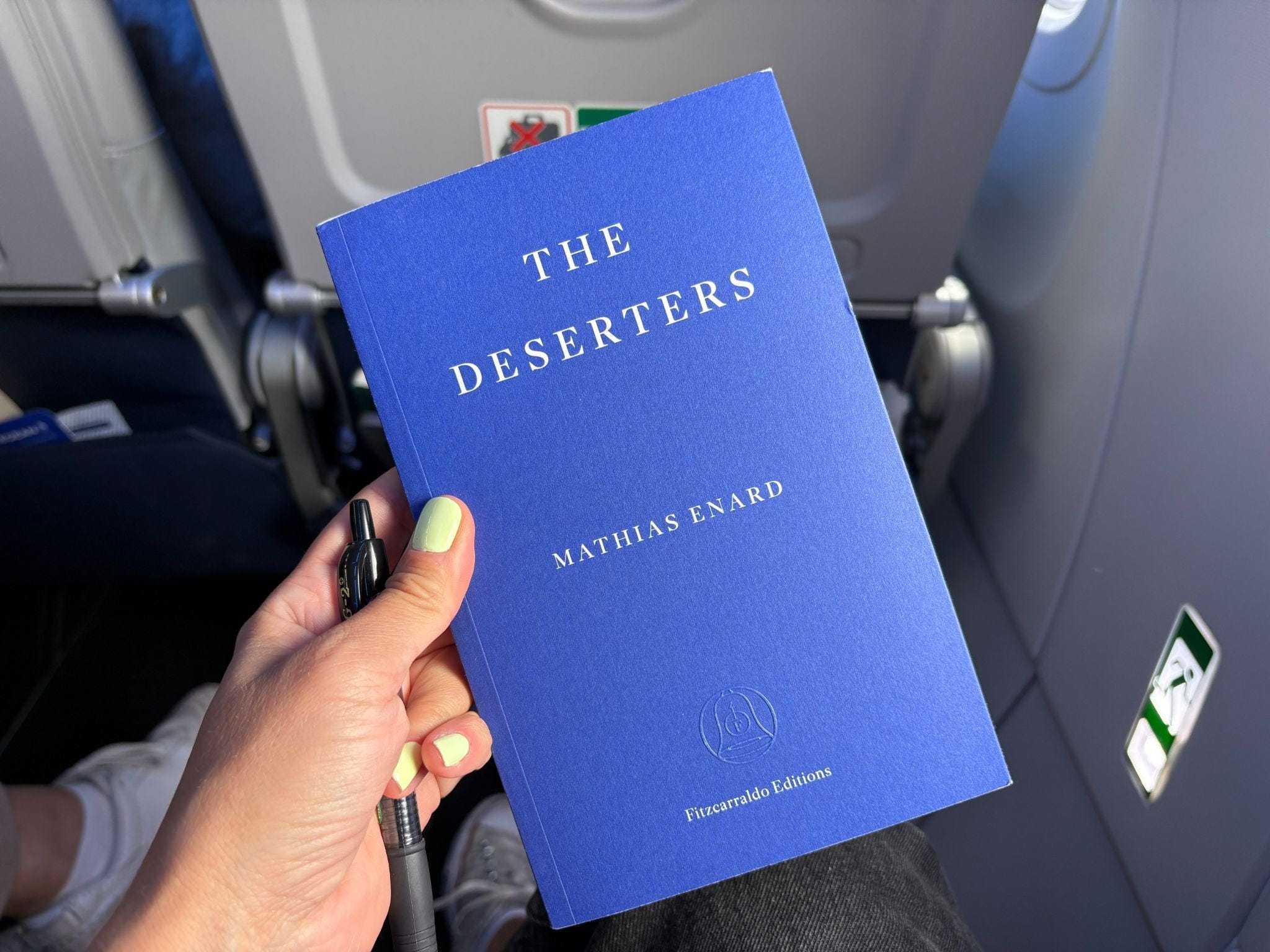
The Deserters by Mathias Enard
Rating: ★★★☆☆
The Deserters follows two parallel timelines, one present-day and one set during a past war, for most of the book though you’re waiting for the moment they converge. That anticipation is either the novel’s greatest tension or its greatest frustration, depending on your tolerance for ambiguity. For me, it was the latter.
The war-era timeline carries a mysterious soldier at its center and I kept reading to find out who he was.
SPOILER ALERT!
That question never gets answered. The two storylines never fully meet, and if you’re the kind of reader who needs narrative resolution, that absence will leave you genuinely unsatisfied.
That said, both timelines are emotionally rich. The writing captures pain, love, and the particular sorrow of lives shaped and broken by conflict. There’s real craft here and clearly a lot of intention behind the structure.
But intention isn’t always enough. A dual timeline story lives or dies by the payoff, and this one left me hanging. I finished it respecting the ambition of the author more than I enjoyed the experience.
⚡️ Check This Out
Oh dear lord.
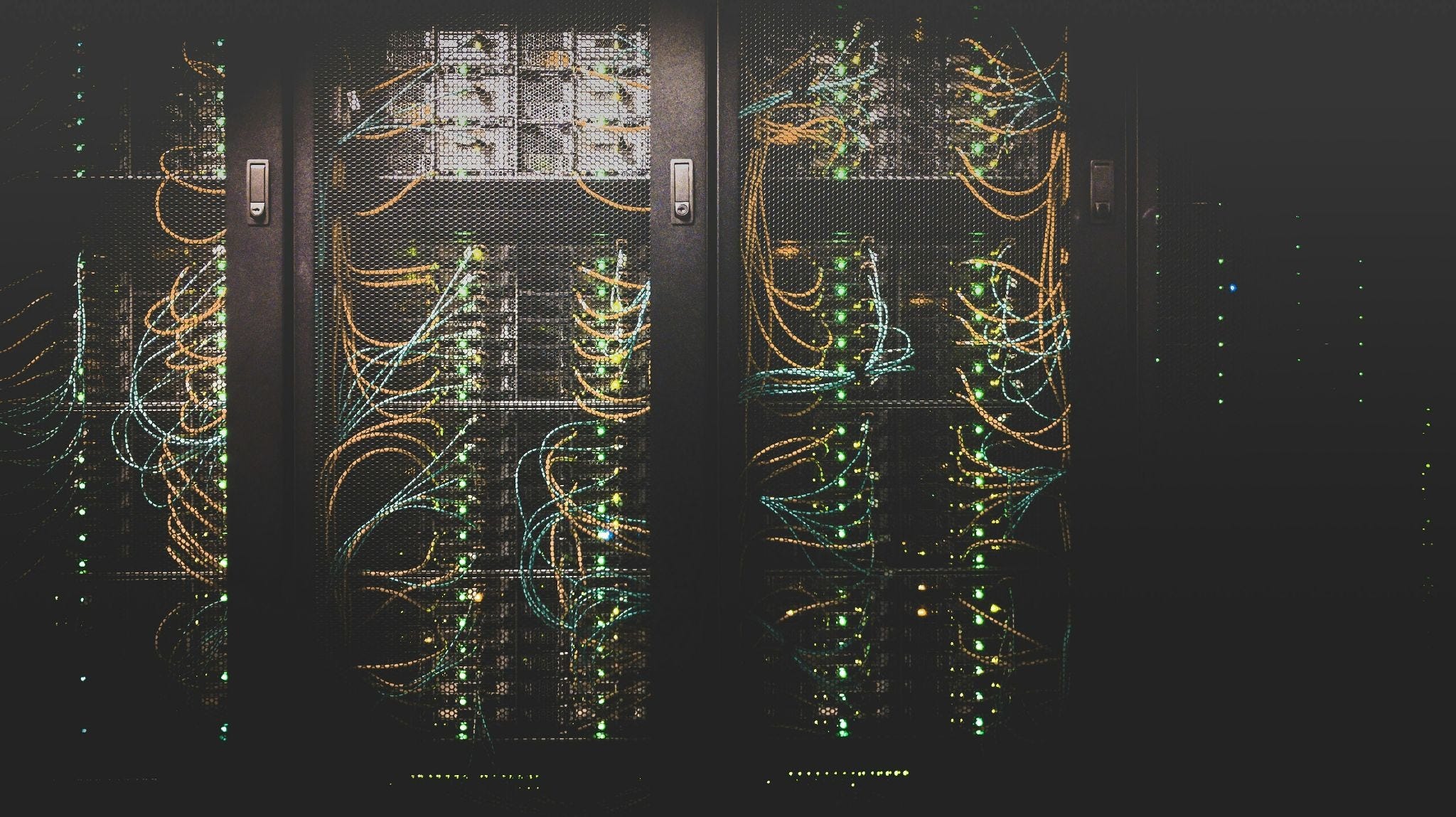
California startup Span is partnering with Nvidia to turn your home into a mini data center.
The average household uses only about 42% of its allotted power. Span wants to fill that gap by installing “nodes” packed with 16 Nvidia GPUs and roughly $500k worth of hardware, then use that spare electricity to run AI compute.
In exchange, homeowners get their energy and internet bills subsidized.
The startup has outfitted one home so far, with around 100 more rolling out in a pilot program later this year.
Whether you’d actually want a $500k server rack humming away in your spare bedroom is a different question entirely.
🗣️ Looking for the Nina’s Notes Podcast?
You can also find the Nina’s Notes podcast on 🔴YouTube 🟢 Spotify, 🟣 Apple Podcasts, 🟠 Substack Podcasts where I interview entrepreneurs and have an archive of 100+ voiceovers of previous Nina’s Notes.
I also co-host Longevity.Technology UNLOCKED!
🎙️ Mondays: LT UNLOCKED interviews with leading longevity innovators, clinicians, and scientists
📰 Wednesdays: Nina’s Notes in your inbox with interviews, deep dives on longevity & neuroscience
🎙️ Fridays: LT UNLOCKED News, a weekly news roundup of the latest in longevity
Find Longevity Technology UNLOCKED on Spotify, Apple Podcasts, and YouTube.
Edited by Wright Time Publishing