


Hey friends,
A super special thanks for those of you who upgraded to a paid subscription.
I write these newsletters every week, and maybe you read some, not all. I get it. Inboxes get full. There’s cool info coming from a lot of awesome writers, and of course I write about whatever I want to write about - it’s NINA’S notes after all ;)
There are weeks when I feel like I’m shouting into the void, but when one of you writes me a supportive message, or upgrades to paid - it’s a reminder that you all are out there, enjoying the content.
Thank you! Thank YOU. THANK YOU!
If you still haven’t decided…a paid subscription is $80/year and you get:
• My 9 longevity guidebooks (a $243 value)
• Access to the full Nina’s Notes archive
• Live Q&As with me
• Exclusive deep dives for paid members only
xoxo,
Nina
P.S Before I get into this deeply personal essay - I have a question for you.
💬 In this note:
🤕📉 What Having Two Chronically Ill Parents Taught Me About Longevity
#176: 🤕📉 What Having Two Chronically Ill Parents Taught Me About Longevity
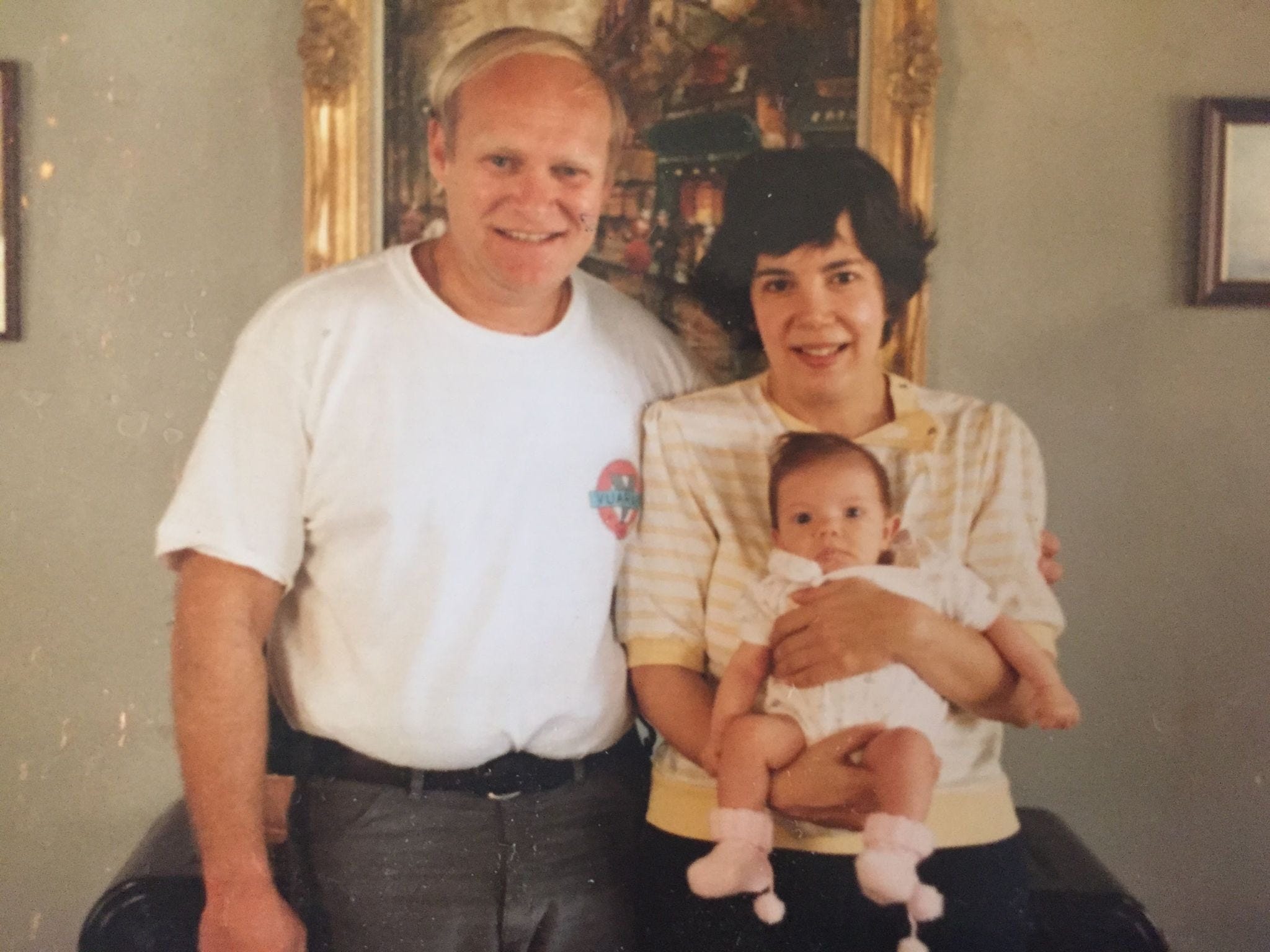
First off, my parents had me when they were “older.” I put this in quotes because what was “old” to their generation is the age that most of my friends are even considering having kids today.
My mom was 36 and my dad was 40 when they had me.
Because of this, I am experiencing my parents aging earlier respectively than most of my friends, who have parents in their 60s right now, while mine are 74 and 78.
While they are aging, and with aging comes changes, that’s not when the chronic illnesses began.
I grew up in a smoking household. Both of my parents smoked indoors, windows closed. Smoked in the car, window cracked. We sat in the smoking section of restaurants (back when they used to have that). As I grew up, we would socialize at the bar in the local casino, where you can smoke openly.
Dad smoked cigars. Mom smoked cigarettes.
Mom started smoking at waking, and smoked until bedtime. About 2 packs a day.
Their rule - “We don’t smoke upstairs.”
Our two-story house has very high ceilings but the living room doesn’t have a floor above it…and well…smoke rises.
My bedroom and childhood playroom, which was converted to my office in my teens, are on the second floor. The office doesn’t have a door.
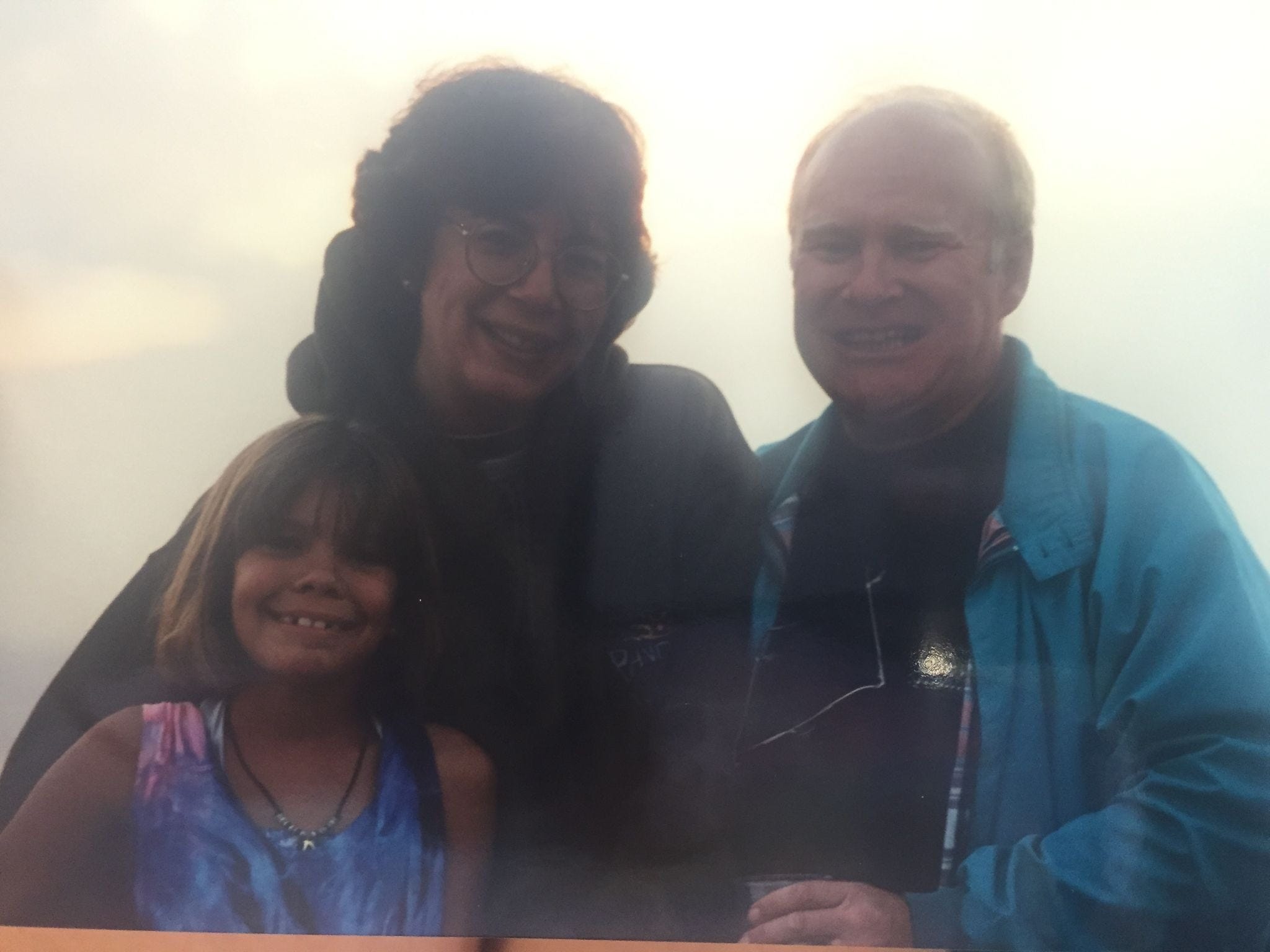
Secondhand smoke was part of my life - no choice in the matter.
I didn’t realize it had an effect on me.
I really thought that was just how life goes.
The times I would notice the effects of secondhand smoke was always when the track season started. The first week of track season we called “hell week” - you THOUGHT you were in shape. Nope - hell week taught you that was a lie. We were out on the track, doing hard workouts, Rounds of sprints with sometimes positive amounts of rest (meaning more rest than the time spent running, ex. 45 sec sprint, 90 sec rest) or sometimes negative rest (less rest than the time spent running, ex. 30 sec rest after a 45 sec sprint).
Always during hell week, I would experience what I can only explain as an asthma attack.
But I would feel my chest tighten to a point where I was wheezing and gasping for air. It would feel scary, but I could calm down after a few minutes.
My coach would ask if I had an inhaler, but I would say no. I was never diagnosed officially.
I thought this was just part of training.
If I worked myself 120%, that’s just what lungs do, they start to panic.
I’d see other teammates very out of breath, but….they didn’t have this.
It never stopped me from being an athlete, and usually after hell week and the first weeks of training, I wouldn’t have any more asthma attacks. It would really only happen if we did something new in training, like a hills day with lots of sprints, or something that really pushed me.
I just thought that asthma attacks came because I was out of shape.
I also never realized how the smoke was affecting my mom.
She had a cough - a smoker’s cough. Deep. Thick. Musousy. Painful to hear.
When she laughed really deeply, it would cause her to cough.
This would happen to me too - I thought it was a character trait.
As the years went on, the coughing became more and more, and that was just…how she was.
Then…I moved out of my parents house to go to college.
I don’t remember exactly how many years it took, but I started to regain my sense of smell.
When I would come home from school to visit, I would notice how smokey the house felt.
I would open windows to get fresh air - only to be met with objections that it was “too cold” and to close the windows.
I would do laundry at my parent’s house, but when I got back to college, I’d open my bag and all my clothes would smell like cigarette smoke, and I had to wash them all again.
I didn’t train as much in college as I did in high school, but I really noticed a difference in myself when I started training again in grad school, 4 years after moving out of my parent’s house.
I signed up for a body-weight CrossFit-type workout with a trainer.
The workouts were HARD. We would do sprints with negative rest, as many reps as possible (AMRAP) and other exercises to get your body to fatigue.
….And I wouldn’t have an asthma attack.
I thought then - I’m just not training hard enough. I can push myself harder.
The asthma attack was my internal signal that I’d reached my limit.
And they…stopped.
I had read that your lungs can heal if you quit smoking. You regain your sense of smell, and you can start to breathe better.
And it was happening to me.
I’m not sure if it took four full years, but it took time and the repair was there the whole time.
My mom quit smoking about 5 years ago, after smoking for most of her life. She quit after she had a really big scare - one that landed her in the ER with oxygen to breathe. And she said - No, this is not how I go. She quit cold turkey.
Since then, she’s regained her sense of smell, and now Dad is forced to smoke his cigars outside.
She has an official diagnosis of Chronic Obstructive Pulmonary Disorder (COPD), which she’s likely had for decades.
And, she uses an oxygen machine to get her O2 blood levels to something where she can, but she is constantly out of breath. She is constantly fighting to breathe. Her cough persists. It’s loud, it’s hacking. It must be so, so painful.
To add another layer, my mom has scoliosis. This is a curvature of the spine. Her spine is in the shape of an S, which causes her ribs to twist around and causes her a lot of pain. She also has severe disc degeneration.
I remember as a kid she would wear a hard plastic back brace to help correct for the S curve, but I don’t think it helped tremendously and was eventually abandoned. She tried everything from specialized chairs, pillows, back massages, topical medication, physical therapy and cortisone injections.
Then and now, she has always been in a lot of pain, which she managed and numbed with pain killers. Also during this time she was depressed and anxious.
Her coughing, the scoliosis, the depression…all of it is a lot to carry, and she turned inside of herself to cope.
Growing up, I remember that she did not exercise because it would hurt her back. She would spend a lot of time indoors, working, writing, reading. Very solo-focused activities and hobbies.
Dad, on the other hand, was diagnosed with diabetes after spending perhaps a decade or so overweight (~200lbs).
After the diagnosis, and our move from SF to Las Vegas, he set upon a very diligent exercise routine.
Everyday - 3 mile walk, carrying weights. He lost the excess weight, even got down to ~145lbs at his slimmest.
But the diabetes stayed.
At first, the diabetes was manageable with metformin and the other diabetes pills. Unfortunately, diabetes is a progressive disease.
People think we’ve got it figured out. We have insulin - diabetes is fixed! No no no, I truly disagree.
Diabetes is an incredibly debilitating disease. High blood sugar causes nerve damage (neuropathy), retinopathy (which can lead to blindness), chronic wounds, and even kidney disease. The worst cases lead to amputated limbs.
I can’t remember exactly when my dad was diagnosed with diabetes, let’s say I was about 8 years old. I’m now 38.
Over the last three decades, I’ve seen this disease slow my dad down.
Managing blood sugar with pills turned into requiring insulin injections.
He’d have to check his blood sugar several times throughout the day with the old finger prick reader.
He’d have episodes where his blood sugar was 500, and he’d be screaming in pain from the neuropathy in his feet.
Now, he’s lost the sensitivity of touch in the tips of his fingers - making it hard to text with touchscreens and he’s losing his vision due to retinopathy.
He’s lost consciousness several times from taking too much insulin and depleting his blood-sugar to critical levels which required paramedic intervention.
When your brain doesn’t have enough sugar to use as energy - it shuts down.
He reached this level at least 6 times.
He has fallen down on his walks due to low blood sugar and had head injuries. On Christmas day a few years back, he fell while going for his walk, landing him in the ambulance and ER for a fractured orbital lobe and stitches.
Sometimes, it’s not a true loss of consciousness. It’s more like a sitting zombie. Eyes open. But no response or movement if you try to communicate. And unfortunately, you can’t get him to eat or drink at this stage to move the blood sugar up. Injecting him with glucose from a syringe is the only option.
And then, like a miracle - he’s back within seconds. And….now on a sugar high.
Nowadays, he is showing signs of cognitive decline and memory loss. It could be from these low blood sugar moments that did lasting damage to the brain.
These low blood sugar events are preventable. My dad was taking too much insulin. He was listening to his doctor’s recommendation.
I spent a month with my dad traveling through Australia in January, and I fixed these blood sugar crashes by adjusting his diet and insulin accordingly. Read more about that adventure here.

Dad’s also had some major surgeries - he went for a quadruple bypass in January 2023. And recovered incredibly well because it was a proactive surgery - not after a heart attack.
I have to give my dad credit here. His 3 mile walks every day for nearly 40 years, with weights, has made the man incredibly fit, strong and his recoveries are outstanding. Without that muscle and exercise, I can’t imagine what his recovery would look like.
He also shattered his femur from a fall in 2015. He had the surgery to fix the bone with rods and screws and was walking within 2 months because he had strong muscle around the bone to hold it in place.
Also, even though he still smokes cigars daily - maybe just 1 to 3 a day. He’s never developed COPD like my mom. I think the daily walks work his lungs and allow him to fight that long-term exposure to smoke.
Watching my parents, as a kid, as a teen, and even now led me to make very concrete decisions about my health.
I decided very young to never smoke. I think I’ve tried 1 cigarette, and 1 puff of a cigar in my entire life.
In high school, some of my friends were smoking marijuana for the first time. I also passed on that. I didn’t want to smoke anything.
Daily fitness became a non-negotiable. In middle school and high school - always training with my track team, or cheerleading team, dance, and gymnastics.
College was more difficult because for the first time I didn’t have a coach. I fell out of training. I’d try to go to the gym, but I would just run on a treadmill. I was intimidated by the weights, and the gym was arranged in a way where the weight floor was usually only the men, and the women on the second floor with the ellipticals, treadmills and bikes.
I got a bit out of shape over those 4 years. I lost my muscle.
I remember really noticing it once when I wanted to get out of the deep end of a pool. To get out, you basically do a pull up and then an extension to lift yourself to your hips to be able to sit on the ledge…and I couldn’t do it. My arms had gotten so weak that I really struggled to press up my own body weight.
When I got to grad school, I arrived in Tucson four weeks before the term started. I didn’t have many friends then, and Groupon was alive and well. I bought every gym pass I could at a discount and I got back into training 4 days a week, with a better diet, and I regained my strength.
Since age 21, I’ve been exercising about 5 days a week - a combination of HIIT class, running, yoga, pilates, and dance. I walk everywhere as much as I can.
In grad school I studied epigenetics, now a household term, but back in 2010-2015 it was just emerging as linked to longevity.
I never directly thought I’d study epigenetics because of my parent’s health but, looking back now, it connects. We can change our epigenetics when we change our environment, or behavior, or habits.
While I never tested it, I imagine the epigenome of my lungs changed significantly over the years since I was exposed to secondhand smoke.
Watching my parent’s health through my whole life led me to the decision that I do not want my health to decline the way theirs has and is continuing to do.
My parents didn’t have this information. They didn’t have a framework. They had stress, habits, circumstances, and no one telling them that the daily choices they were making would compound, decade over decade, into the bodies they have now.
I don’t blame them. I love them deeply. And growing up with them has been one of the most formative educations of my life.
What I know now, that they didn’t know then:
Chronic disease is largely preventable. And the prevention is not complicated.
Move your body. Every day. Even a walk counts, as my dad has proven for 40 years.
Don’t smoke. Don’t numb. Don’t sit still.
Protect your lungs, your blood sugar, your spine, your mind.
The body keeps score. It keeps a very, very long score.
All of these life experiences led me to study longevity for a living, where I interview scientists, read the papers, and write the notes. But the reason I care so deeply about it isn’t just intellectual curiosity.
It’s personal.
It started in a smoky living room in Las Vegas, watching my mom cough and my dad check his blood sugar.
And it never stopped.
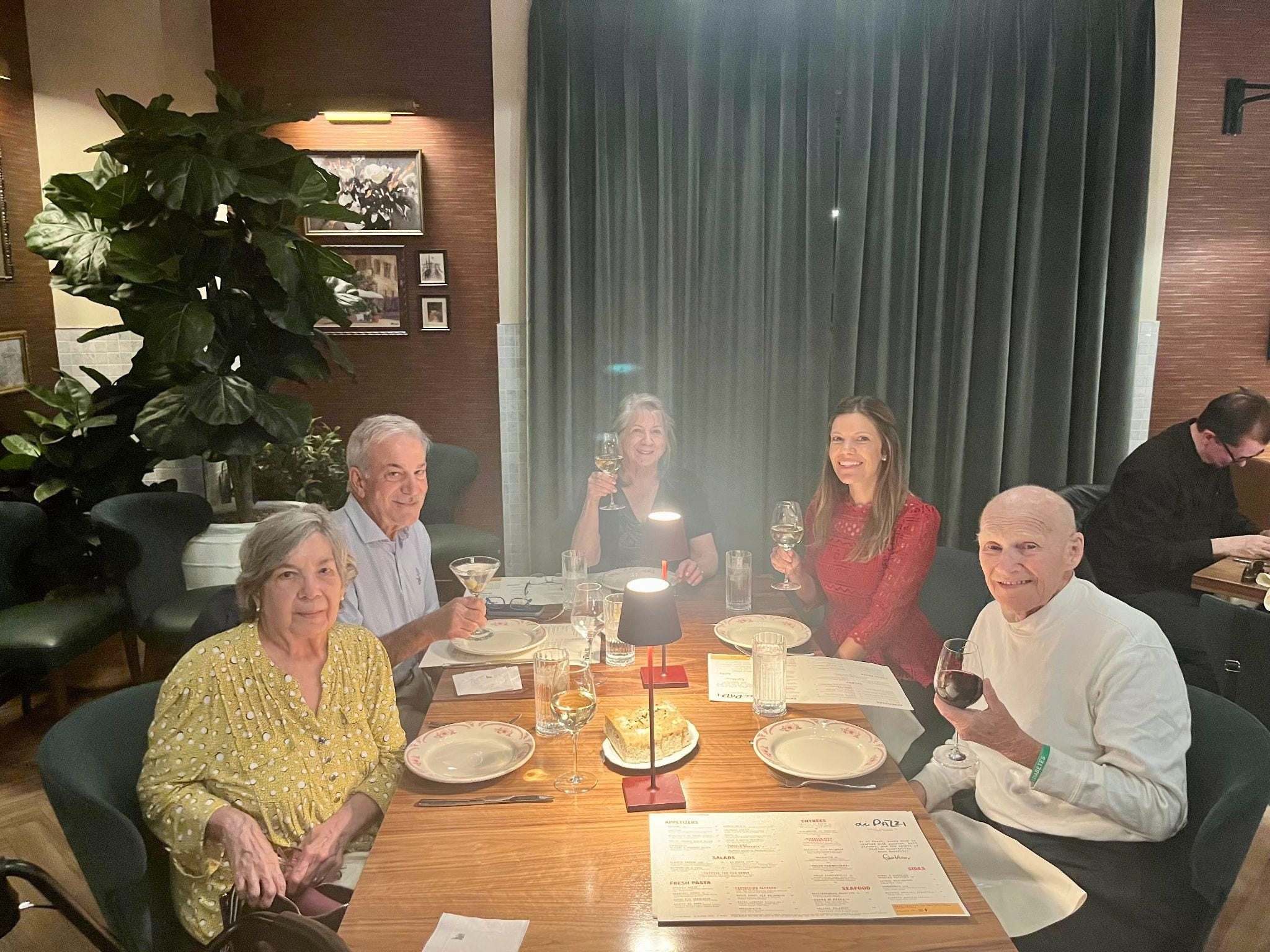
Mom, Uncle Tony, Aunt Kathy, me & Dad (Las Vegas, 2026)
Edited by Wright Time Publishing
Your father has managed his severe metabolic conditions very well, given his circumstances and genetics. I can tell you're very proud of what he has achieved.
A most moving personal story, showing the severe impact of lifestyle choices on health and wellness. I myself was never a smoker and usually had a BMI of 30, but here I am at 65 with a T2D diagnosis and 3 coronary artery stents! So if I could talk to myself when I was in my 30s, I would have advised myself to take strong action to maximize my metabolic health. But you let yourself slide into poor lifestyle, because when you are still relatively young, you tend to forget that you are going to die!
I’m here, reading, and forever impressed with you. Thank you for sharing your life and your notes ❤️