


Hey Friends,
I’m obsessed with sleep.
Recently, my sleep has been suffering - world travel, jet lag, altitude…I’ve been rough on my body.
But now that I’m back in Lisbon - my peaceful sanctuary, my sleep has been some of the best I’ve had in years.
But because I keep coming back to this idea that we are wildly underestimating what happens to the brain during those unconscious hours.
We think of sleep as passive. That our body goes quiet, and the mind goes offline.
But the more I dig into the research, the more I’m convinced that sleep is the most active thing you can do for your brain’s long-term health.
This week I want to take you inside one of the most fascinating and underappreciated systems in the human body: the glymphatic system.
Never heard of it? It’s the brain’s own sewage network!
and…you can hack it.
Enjoy,
Nina
💬 In this note:
🧠 The Glymphatic System Hack: How To Detox Your Brain During Deep Sleep
📚 Why We Sleep: Unlocking the Power of Sleep and Dreams
⚡️Watch The Brain’s CSF Pulses During Sleep
Want to improve your health and wellness in 2026?
I’ve written 9 guidebooks to help you get started. They are included when you upgrade to a paid subscription of Nina’s Notes
Or get the individual guidebooks here: Grab the guidebooks.
#171: 🧠 The Glymphatic System Hack: How To Detox Your Brain During Deep Sleep
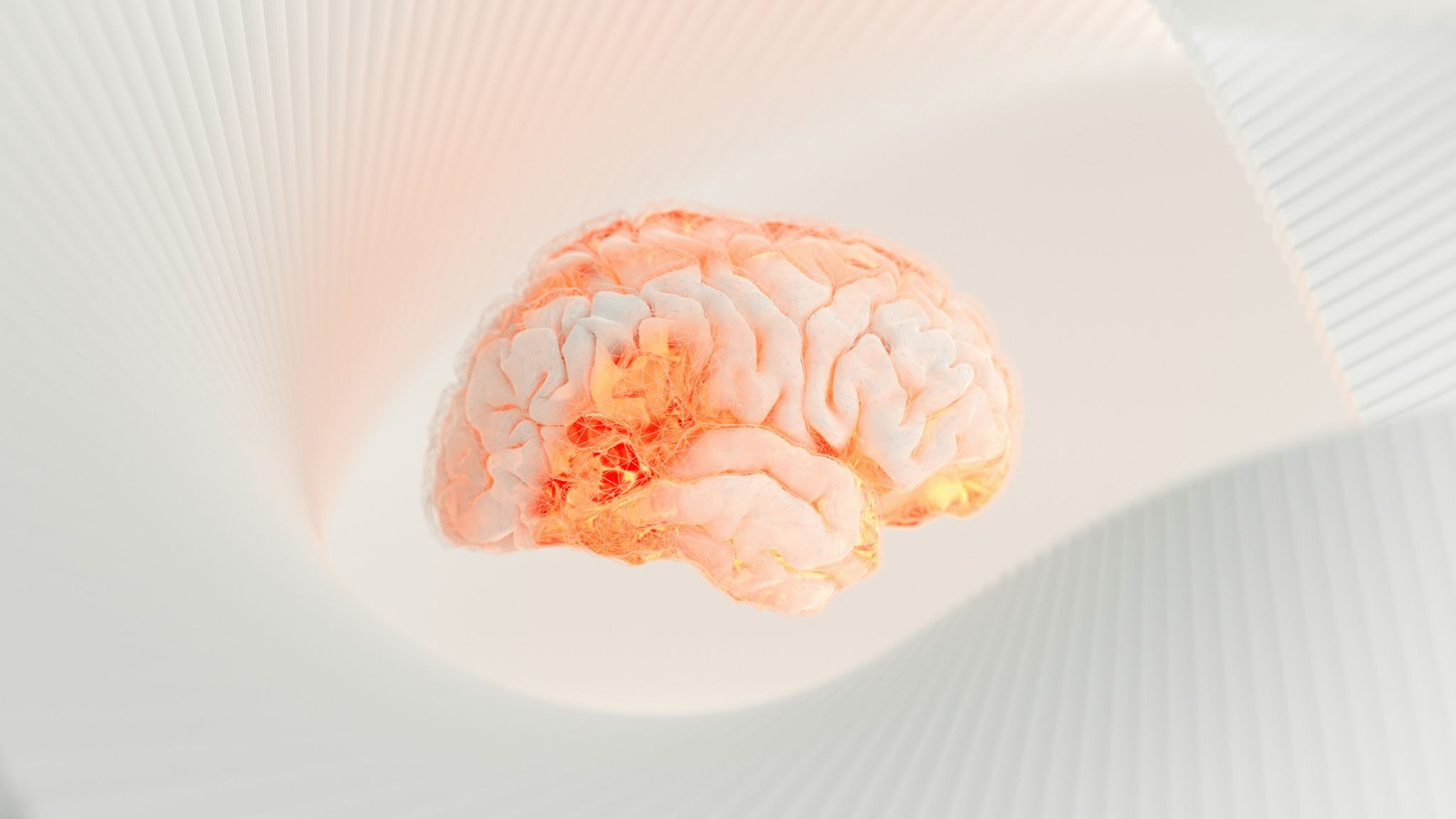
Every hour you are awake, your brain is accumulating metabolic waste.
Proteins, cellular debris, and neurotoxic byproducts are building up in the space between your neurons, called the neural interstitium, every moment you are awake.
And the only way to flush them out is through deep sleep.
Deep sleep activates your glymphatic system which carries that waste out.
What Is the Glymphatic System?
The glymphatic system is your brain’s waste clearance network.
The name is a mashup of “glial” (the support cells of the brain) and “lymphatic” (the body’s wider drainage system).
The glymphatic system was only identified in 2012 (!!!) by neuroscientist Maiken Nedergaard at the University of Rochester.
Before Nedergaard’s discovery, neuroscientists were puzzled. The rest of the body has a lymphatic system to remove cellular waste. But the brain sits behind the blood-brain barrier, sealed off from that conventional drainage network.
So how was it clearing the cellular waste and garbage from the brain?
It turns out the brain has its own hydraulic system which moves the cerebrospinal fluid (CSF), a clear liquid that surrounds and cushions the brain, along channels formed by astrocytes which fill the spaces between neurons, providing scaffolding and physical support to the brain.
Astrocytes are essential caretakers of the brain and spinal cord.
As the CSF flows through them, it flushes the waste dissolved in the interstitial fluid out of the brain, draining it into the lymphatic vessels that run alongside the neck.
It gives a new definition to “brainwash,” huh?
Why Does It Only Work During Sleep?
When you are awake, your brain is busy.
Neurons are firing constantly, astrocytes are actively supporting neuronal function, and the glymphatic system runs at only about 5-10% of its sleep capacity.
But during slow-wave sleep (the deep, dreamless stages of non-REM sleep), the brain’s glial cells actually shrink up to 60% in size.
This dramatically increases the space between cells, allowing cerebrospinal fluid to flow much more freely and efficiently through the brain tissue.
That means that the glymphatic system kicks turns on full blast. The CSF floods through, waste gets swept up, and the brain is rinsed clean. (ohhhh ahhhh 🧖🏾♀️)
One of the key waste products cleared by this process is beta-amyloid, the protein that clumps into the plaques strongly associated with Alzheimer’s disease. Studies in mice show that beta-amyloid clearance is twice as fast during sleep as during wakefulness.
Data like this show us why sleep is not a passive luxury.
It is important and acts as active neurological maintenance.
How to Optimize Your Glymphatic System
So if we know the glymphatic system activates during slow-wave sleep, can we do anything to maximize it?
YES! We can.
Two of the most evidence-backed interventions are surprisingly simple.
Your sleeping position and core body temperature.
Sleeping Position
A 2015 study published in the Journal of Neuroscience led by researchers at Stony Brook University, found that sleeping on your side (lateral position) significantly enhances glymphatic transport compared to sleeping on your back or stomach.
Why is side sleeping the best?
It comes down to gravity and fluid dynamics.
On your side, your brain’s drainage pathways are aligned in a way that maximizes CSF flow and minimizes resistance.
Laying on your right side appears to offer the best glymphatic clearance, though the research is still emerging on whether right vs. left makes a meaningful difference for most people.
Interestingly, many animals that sleep, from dogs to elephants, default to lateral positions. It may be one of the most evolutionarily conserved behaviors for brain health.
Core Body Temperature
Core temperature is a powerful regulator of sleep architecture, and by extension, a powerful regulator of your brain’s glymphatic activity.
Your body’s core needs to cool by roughly 0.5–1.5°C (1–3°F) to initiate and maintain deep slow-wave sleep.
Deep sleep is most abundant in the early part of the night, coinciding with the natural drop in core body temperature that begins a few hours before sleep.
You can support your body’s natural cooling process by keeping your bedroom cool (18–20°C / 65–68°F) to accelerate your core temperature drop and make falling asleep easier.
Taking a warm bath or shower 1–2 hours before bed works because the warm water draws blood to the skin’s surface and accelerates heat loss once you step out, rapidly dropping core temperature.
You can also try cooling mattress pads (like ChiliPad or Eight Sleep) which have shown meaningful improvements in slow-wave sleep in several studies.
There is also emerging interest in deliberate cold exposure earlier in the day (cold showers, cold plunges) as a way to regulate the circadian temperature rhythm and prime deeper sleep at night.
But the key here is that cold exposure needs to happen earlier in the day (before 4pm or so). Cold plunging at night (and this is really my personal experience here) spikes adrenaline too much which makes falling asleep more difficult.
Listen to 40Hz To Hack Your Glymphatic System
Before I get to the full protocol, I have to share something I covered recently on Longevity.Technology UNLOCKED with Phil Newman because it fits this topic almost too perfectly.
The rest of this note, including a breakdown of a brand new PNAS study on sound therapy for brain detox, and the full glymphatic protocol, is for paid subscribers.