


G’day mate,
I’m writing to you from sunny Australia, where I celebrated my birthday and the new year with my BIG AUSSIE FAMILY 🐨🦘.
That’s right, something you may not know, is that I’m an Australian-Italian-American. 🇦🇺🇮🇹🇺🇸
My paternal grandmother was Australian and my Dad grew up in Brisbane and later California.
While my maternal grandparents were from Sicily, and raised my mom in Brooklyn and then California.
I like to think I got the best of all three cultures - I have a perpetual tan, I’m snobby about coffee, talk with my hands and I’m overly optimistic and enthusiastic (sometimes too loud), all while sharing a passion for food. 🙂
Over the next few weeks, I’ll be traveling around Australia with my Dad and would love to hear your tips for Western Australia. We’re going on a roadtrip!
I’m also digging into all things Aussie - be it shamanism, wacky health fads or new biohacks. Posts coming soon!
Wishing you a prosperous and abundant 2026!
Xo,
Nina
P.S. I recorded this episode and it’s on my YouTube Channel. Watch it here:
💬 In this note:
🤩 We Expect Perfection Out Of AI and Not From Humans - Why?
📚 The Savage Detectives
⚡️ Cow Snuggling
🔮 Cool Job Opportunities
#166: 🤩 We Expect Perfection Out Of AI and Not From Humans - Why?
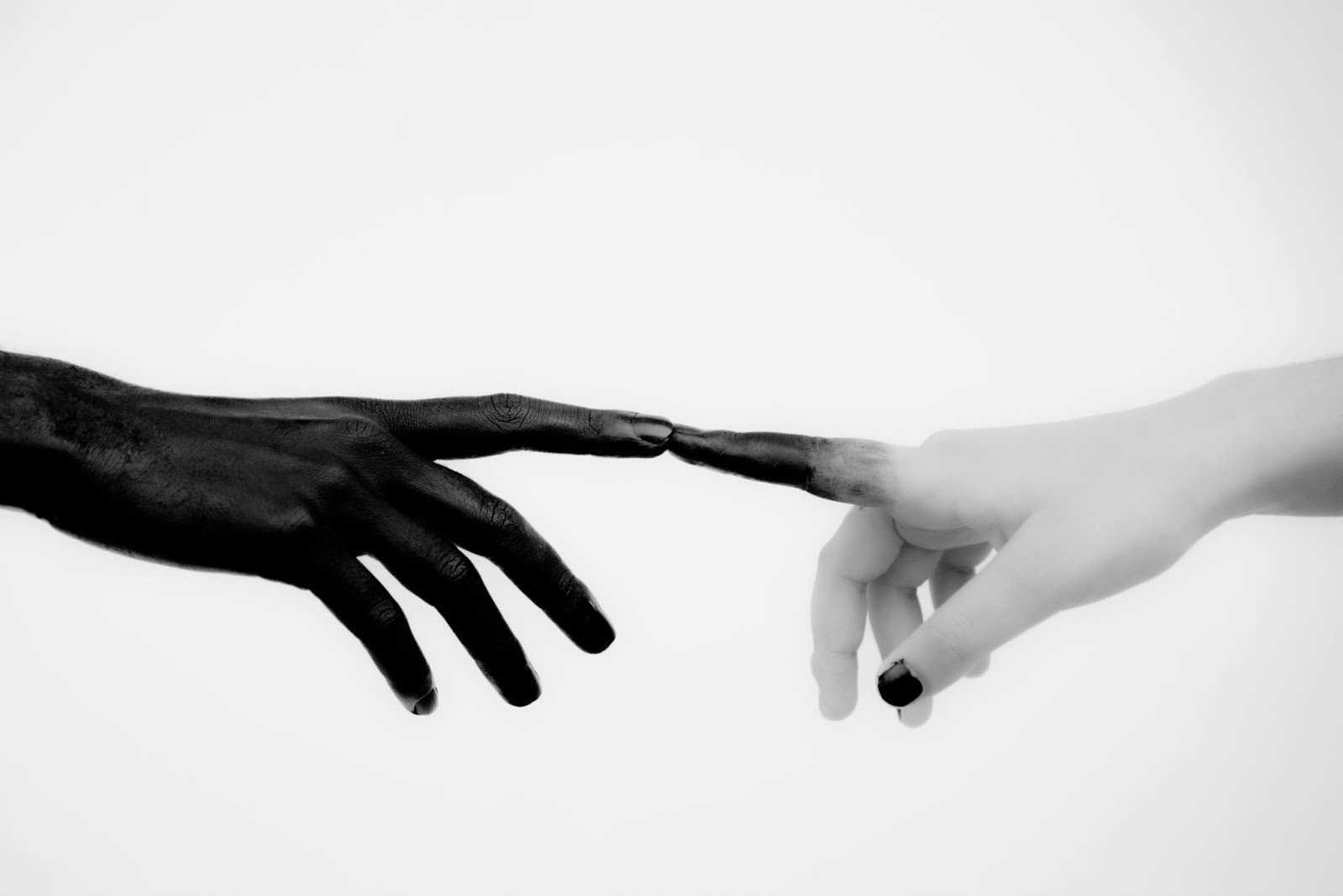
When I use a large language model (LLM) and I find out that it’s hallucinating or making up sources for different claims - I get frustrated.
I would feel the same with a colleague, if they are stumbling over their words and misremembering books or facts they know. However, I would give my colleague some grace if they made a mistake, misremembered, or misspoke.
But when it comes to AI, myself and others, expect perfection. Not just that, we expect a level of perfection we would not expect from humans.
With humans, we expect messiness, we expect a level of “human-error” because we are not machines.
But as we develop AI, LLMs and AI-powered softwares, we expect absolute perfection. The concern is “what if it makes a mistake?”
People are already using LLMs to help with medical diagnoses, and the truth is, it is doing a better job than some clinicians.
In human interactions, we have a lot of flaws. Diagnostic mistakes happen in 5-20% of doctor visits. That’s roughly 1 in 5 to 1 in 20 appointments where something gets missed or misinterpreted.
And it’s not just medicine where we see these margins of error. 80% of aviation accidents can be traced back to human error, not mechanical failure, but people making mistakes under pressure.
Even the elite financial institutions aren’t immune. Roughly 20% of audits from the four biggest U.S. accounting firms have significant deficiencies.
And get this: in data entry, a 95% accuracy rate is considered good. Which means even when we’re doing well, we’re still getting it wrong 5% of the time.
The pattern is clear: humans are brilliant, adaptive, creative problem-solvers that are also inconsistent, distractible, and prone to cognitive biases.
There is a belief that humans operate at a 100% accuracy, but that is not the reality. Even elite professionals are only achieving a 90-95% accuracy.
While expecting AI to be perfect is not a reality, I think the expectation for AI to outperform us is a very real one.
What does that actually mean?
AI needs to be wrong less often than us.
Or better than what we have now.
So what makes us human?
It’s imperfection.
When I read an article clearly generated by AI, it feels soulless. You can sense it. It lacks the emotion, the depth, the playfulness, the personality that a human author brings.
It’s just empty.
As humans, our imperfections make us interesting. We have stories about our flaws, our mistakes, and the lessons we learned.
AI on the other hand uses brute force to solve a problem, trying all scenarios, perhaps learning along the way, but without the story to tell.
Would we want AI to tell us how it tried 10,000 solutions to our problem, only to give us a generic answer that cites the wrong sources anyway?
Would we want to hear that story?
AI tells stories using the same frameworks, the same structures, and it’s boring.
The variability and unpredictability is what keeps humans coming back for more.
I like to think that trickles into Nina’s Notes and why you come back here as loyal readers.
You never know what you’re going to get, but it’s always interesting. I hope!
Topics vary. I share my opinion. I share facts. I share short stories. That is what makes the writing human and fun to read.
When ChatGPT hit the masses, I played with it a lot for a variety of writing problems. I used it to structure posts. I asked it to help me make outlines. I asked it to re-write my overly scientific writing for different reading levels, so I could learn how to explain things simply.
It’s been massively helpful but it also trained me to notice distinctively AI-qualities in writing.
And now I’ve read so much AI-generated content, from the answers to my own prompts to slop on the internet, that I’ve really scaled back my use.
I don’t use AI assistance for my writing at all anymore.
We are here for the human element of writing, the imperfections, while we wait for AI to out perform us on other tasks.
I believe the age where we pay a premium for human-generated content, art, music and more, will come sooner than we think.
We think we can scale the human experience with AI - but I think what we will find is an overly perfect, emotionless “dark age” of art and culture.
I already felt it when my favorite podcast host switched over to an AI-generated voice to create more content at scale.
The pace is wrong. The irregularity isn’t there.
Yes the AI voice sounds like her and the content itself is decent, but it leaves me knowing I didn’t just listen to a human.
There is something about knowing there was a human on the other side of the microphone, putting in the time to talk with the audience that makes the connection.
Without it, we feel the lack of connection and that may add fuel to the fire of the loneliness epidemic in ways that we can’t yet expect.
When we do make AI more human and accept the flaws, mistakes and inaccuracy - perhaps then the writing will become more human.
So here’s the paradox we’re living in: We demand perfection from AI while accepting our own messy humanity. We want machines to be flawless, yet we’re drawn to the imperfections that make us human.
Maybe the question isn’t “why do we expect perfection from AI?”
Maybe it’s “what are we losing when we get it?”
Because if AI replaces human creation, connection, and conversation, we might find ourselves in a world that’s technically better, but feels fundamentally worse.
The choice isn’t between perfect AI or imperfect humans. It’s about deciding which imperfections we are willing and want to live with.
Want To Go Beyond the Newsletter?
I mentor founders and ambitious professionals who want to build resilient minds and companies using evidence-based tools from neuroscience and longevity science.
Click here to learn more about private mentorship and upcoming group sessions here.
📚 Book of the Week
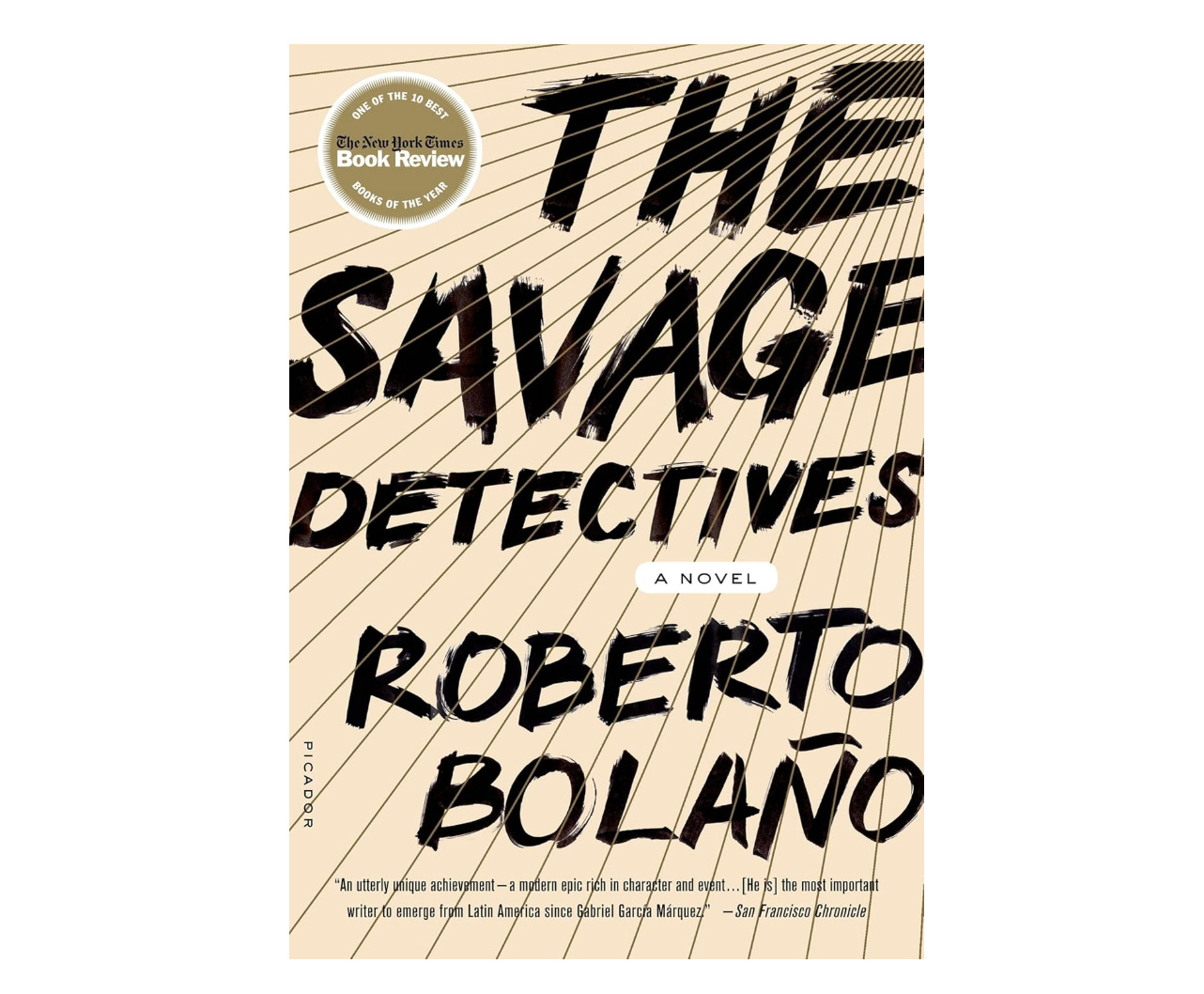
The Savage Detectives by Roberto Bolano
Rating: ★★☆☆☆
This book starts out with horny bohemians.
These young poets are finding themselves through this chaotic, sexual energy.
It captures this young, “finding myself” energy they’re experiencing during university in Mexico City.
Then the poets all travel, finding themselves in all the corners of the world. Some in Europe, some in South America, and others visiting one another.
Things get a bit calmer, but each chapter is another person’s story, and you see how their lives all intertwine and evolve.
The poet group, Visceral Realists, were popular in CDMX, but as time passes, their ideas are abandoned and the poets move on.
I put the book down around Part III, for a long period of time…and then I never picked it back up again.
It’s a very long book, which had a hard time keeping my attention, and I didn’t pick it back up because I found the characters frustrating with very little actually happening in the plot.
Sorry Roberto Bolano.
Want to Improve Your Health and Wellness in 2026?
I’ve written 9 guidebooks to help you get started.
⚡️ Check This Out
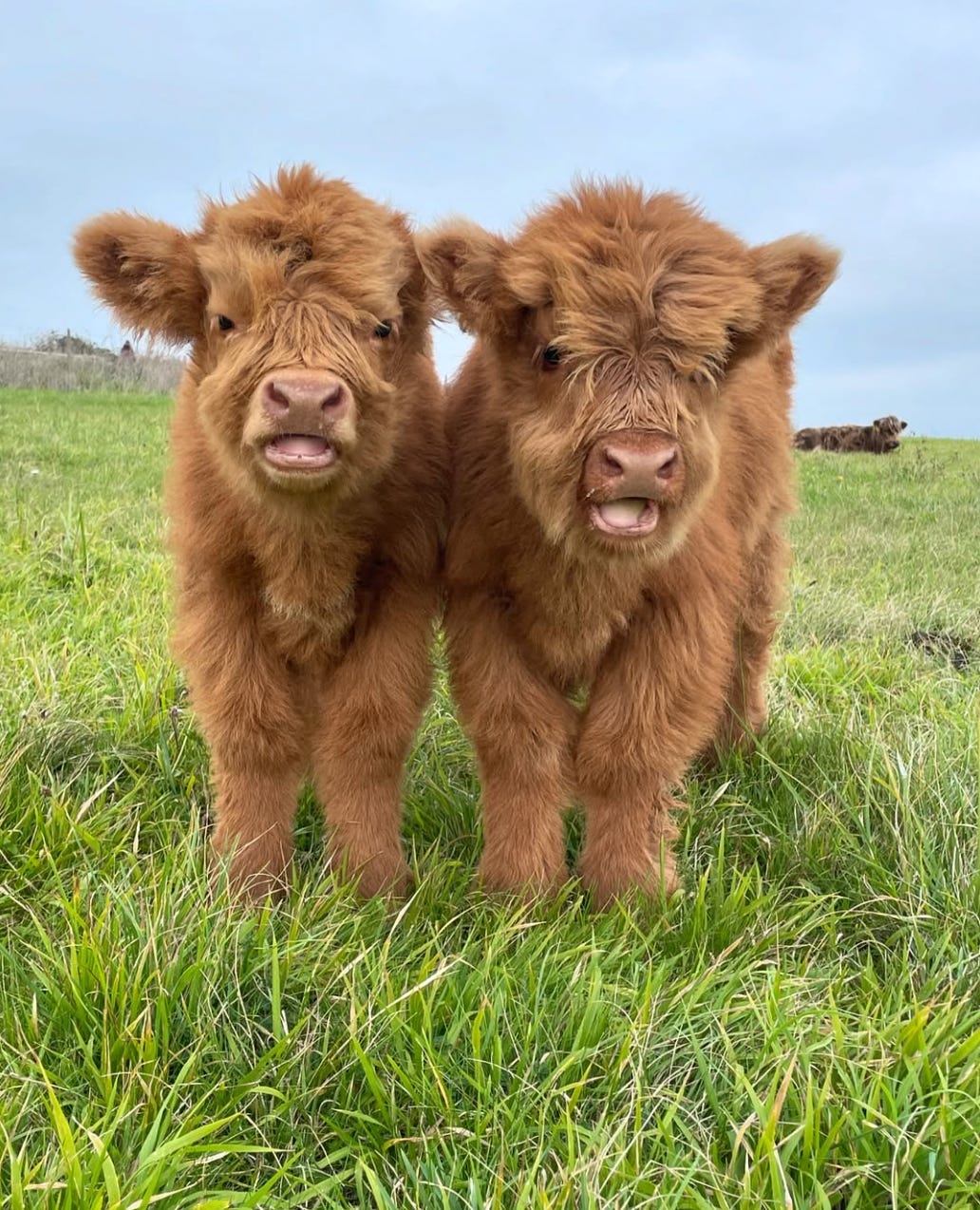
Cow snuggling.
Like goat yoga, and other wellness trends like equine therapy, cow cuddling has risen in popularity.
While technically a form of agritourism, cow cuddling does have calming and therapeutic wellness benefits.
Cows’ warm bodies and slow resting heartbeats can promote oxytocin release in humans.
Farms, like Hickory Hearth Highlands in Pennsylvania, offer $55 hour long sessions, and saw over 2,500 visitors in 2024.
Cow cuddling experiences let visitors brush, pet, feed and cuddle the cows during timed sessions.
Popular cuddlers include fluffy varieties like Highland cows, who’ve become social media stars in recent years because, well, just look at them.
🔮 Cool Job Opportunities
Eli Lilly launched the TuneLab platform to give biotechnology companies access to AI-enabled drug discovery models built through over $1 billion in research investment. Now they are looking for a Product Manager (SF, in person).
VectorY is developing innovative vectorized antibody therapies for the treatment of neurodegenerative diseases such as ALS and Huntington’s disease. They just got Fast Track designation for the US FDA and are hiring a Clinical Trial Administrator (Amsterdam, hybrid).
Are you hiring? Want to share your job with Nina’s Notes? Send me an email: hi@ninasnotes.xyz
🗣️ Are You Getting All of Nina’s Content?
The Nina’s Notes podcast is on 🔴YouTube, 🟢 Spotify, 🟣 Apple Podcasts, 🟠 Substack Podcasts
Check out Nina’s newest podcast, Longevity.Technology UNLOCKED.
Thanks for reading Nina’s Notes #166. If you like this newsletter, click the share button and send it to a friend.
Edited by Wright Time Publishing